Butterfly Valve
Explore our comprehensive range of high-performance industrial valves, engineered for reliability and precision in every application.
Showing 6 of 6 results
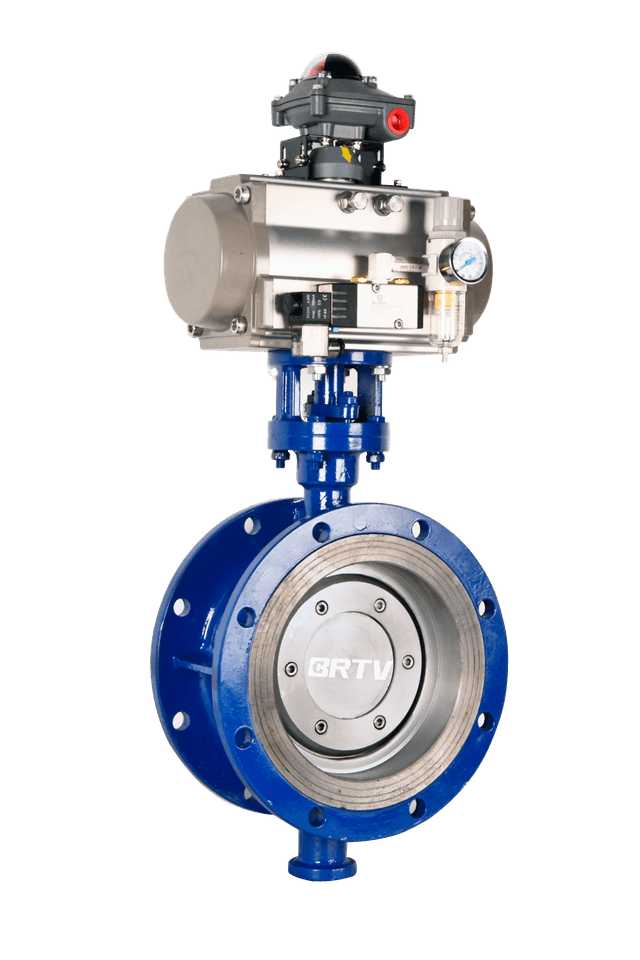
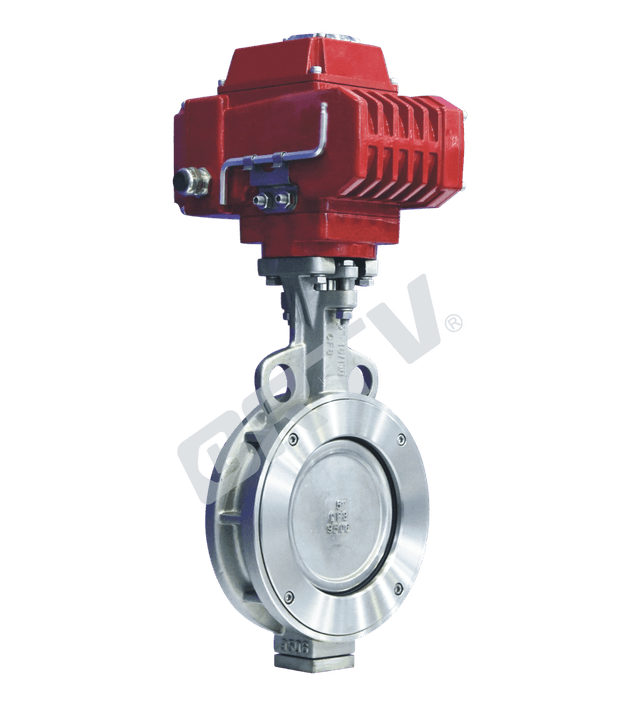
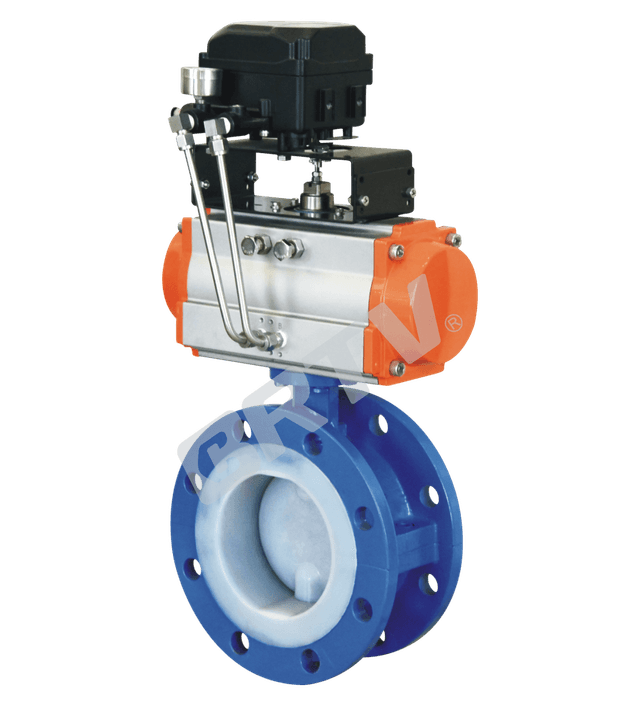
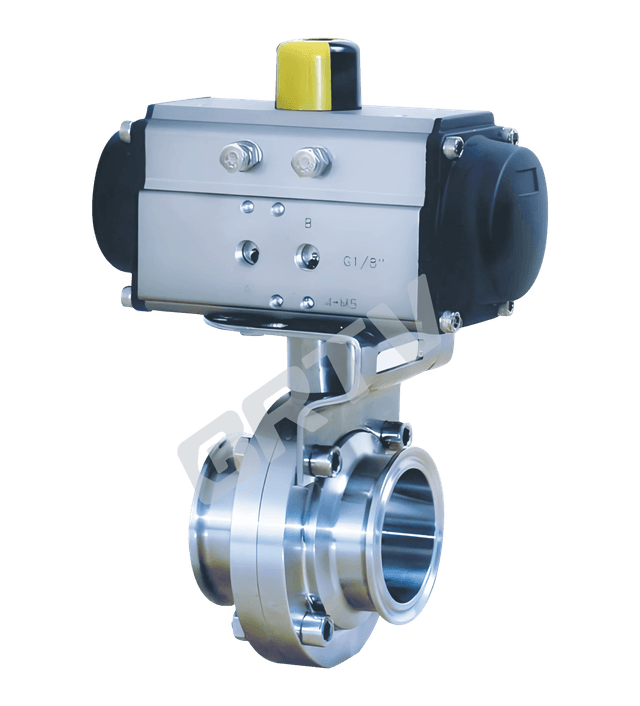
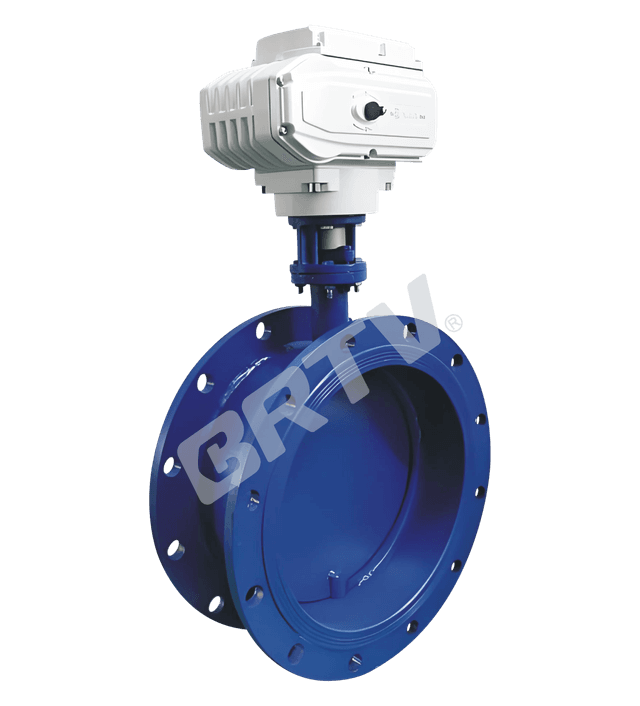
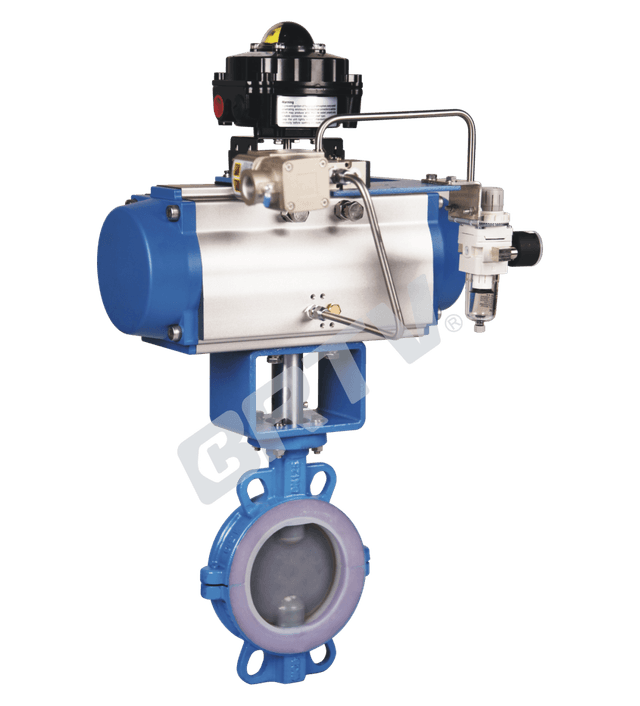
Service and Structural Features of Product
Butterfly valves are widely used for automatic or regulating control of fluids in industries such as natural gas, petroleum, chemical engineering, metallurgy, paper making, electric power, mining, textile printing and dyeing, biopharmaceuticals, daily chemicals, food and beverage, water treatment, and air treatment. They are commonly used together with automatic pneumatic instrumentation systems.
Structural Features of Butterfly Valves:
Pneumatic Actuator: The valve adopts the new AT series pneumatic actuator, whose structure has obtained a national utility model patent (ZL 2009 20175421.2). It is available in double-acting and single-acting (spring return) types and uses a rack-and-pinion transmission mechanism, providing safer and more reliable performance. Large-diameter valves are equipped with AW series pneumatic actuators featuring a fork-type transmission structure with reasonable design and large output torque. Both double-acting and single-acting (spring return) types are available. For detailed parameters, please refer to the AT and AW series pneumatic actuator catalogues of Zhitai Company.
Electric Actuator: Electric actuators have strong anti-deviation capability because their output thrust or torque is basically constant, enabling them to overcome the unbalanced force of the medium and achieve accurate control of process parameters. Therefore, the control accuracy is higher than that of pneumatic actuators. When equipped with a servo amplifier, forward and reverse action can be easily interchanged, and the signal valve position state (hold / fully open / fully closed) can be easily set. In case of failure, the valve will remain at its original position, which cannot be achieved by pneumatic actuators. Pneumatic actuators require an additional combined protection system to achieve position holding.
Center-line Elastic Sealing: The sealing materials include rubber, fluoroplastics, or fully lined rubber and fluoroplastics. The elastic valve seat, together with the high-precision butterfly plate, ensures zero leakage. Bushings are installed at the bottom, middle, and upper parts of the valve stem to support and rotate the stem while maintaining minimal friction. The product features light weight, compact size, and quick opening and closing.
Triple-offset Sealing Structure: The valve seat sealing materials include metal sealing and fluoroplastic sealing. Metal-sealed butterfly valves adopt an elastic sealing ring seat and a multilayer composite butterfly plate. The three-dimensional eccentric sealing structure provides low friction during opening and closing, reliable sealing performance, wear resistance, high temperature resistance, self-centering capability, minimal leakage, and long service life.
The product features a reasonable structure, light weight, compact size, small installation space, convenient operation, and fast opening and closing. It is currently one of the fastest-developing and most widely used valves for fluid control.
Products Performance Specification
| Pressure Grade | 0.6 | 1.0 | 1.6 | 2.5 | 4.0 | 6.4 | 10.0 | 150 Class | 300 Class | 400 Class | 600 Class |
|---|---|---|---|---|---|---|---|---|---|---|---|
| Shell Test (MPa) | 0.9 | 1.5 | 2.4 | 3.8 | 6.0 | 9.6 | 15.0 | 3.03 | 7.5 | 10.2 | 15.0 |
| Sealing Test (MPa) | 0.7 | 1.1 | 1.8 | 2.8 | 4.4 | 7.0 | 11.0 | 2.2 | 5.5 | 7.48 | 11 |
| Air Sealing Test | 0.6 MPa | 0.6 MPa | 0.6 MPa | 0.6 MPa | 0.6 MPa | 0.6 MPa | 0.6 MPa | 0.6 MPa | 0.6 MPa | 0.6 MPa | 0.6 MPa |
| Applicable Medium (Body Material C) | Water, vapor, oil, liquefied gas, etc. | Water, vapor, oil, liquefied gas, etc. | Water, vapor, oil, liquefied gas, etc. | Water, vapor, oil, liquefied gas, etc. | Water, vapor, oil, liquefied gas, etc. | Water, vapor, oil, liquefied gas, etc. | Water, vapor, oil, liquefied gas, etc. | Water, vapor, oil, liquefied gas, etc. | Water, vapor, oil, liquefied gas, etc. | Water, vapor, oil, liquefied gas, etc. | Water, vapor, oil, liquefied gas, etc. |
| Applicable Medium (Body Material P) | Corrosive mediums such as nitric acid | Corrosive mediums such as nitric acid | Corrosive mediums such as nitric acid | Corrosive mediums such as nitric acid | Corrosive mediums such as nitric acid | Corrosive mediums such as nitric acid | Corrosive mediums such as nitric acid | Corrosive mediums such as nitric acid | Corrosive mediums such as nitric acid | Corrosive mediums such as nitric acid | Corrosive mediums such as nitric acid |
| Applicable Medium (Body Material R) | Corrosive mediums such as acetic acid | Corrosive mediums such as acetic acid | Corrosive mediums such as acetic acid | Corrosive mediums such as acetic acid | Corrosive mediums such as acetic acid | Corrosive mediums such as acetic acid | Corrosive mediums such as acetic acid | Corrosive mediums such as acetic acid | Corrosive mediums such as acetic acid | Corrosive mediums such as acetic acid | Corrosive mediums such as acetic acid |
Temperature Rating of Seat Sealing Material
| Code | Material | Applicable Temperature (°C) |
|---|---|---|
| H | Alloy Steel 304, 316 | -30 ~ 425 |
| F | Reinforced Polytetrafluoroethylene (PTFE) | -40 ~ 120 |
| X | Buna-N Rubber | -20 ~ 70 |
| X | Ethylene-Propylene Rubber | -40 ~ 120 |
| X | Food Ethylene-Propylene Rubber | -40 ~ 120 |
| X | Fluorine Rubber | -20 ~ 150 |
| J | Full-lining Buna-N Rubber | -20 ~ 70 |
| F4 | Full-lining Polytetrafluoroethylene (PTFE) | -40 ~ 180 |
Selection Accessories
Accessories can be selected according to different control requirements:
On-off type accessories: Single solenoid valve, double solenoid valve, limit switch box (position feedback).
Regulating type accessories: Electro-pneumatic positioner, pneumatic positioner, electro-pneumatic converter.
Air supply treatment accessories: Air filter regulator, air source treatment unit (FRL).
Manual mechanism: ZTSD Series.