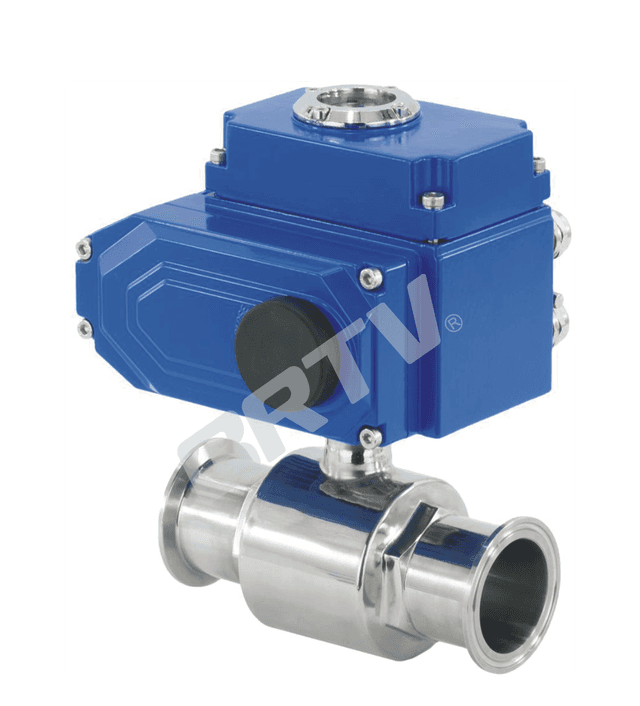
Ball Valve
Explore our comprehensive range of high-performance industrial valves, engineered for reliability and precision in every application.
1. Ball valve working principle
1) Quarter-turn mechanism
A spherical closure device operates as a quarter-turn shut-off mechanism, employing a rotating ball with a bore to regulate the flow of various media. When the actuator or manual handle turns the internal sphere by ninety degrees, the flow passage aligns with the pipe axis, allowing fluid to move through with minimal obstruction. Reversing this rotation positions the solid part of the sphere against the seats, effectively isolating the downstream section. This mechanical design ensures rapid operation and a reliable seal, making it a preferred choice for both isolation and simple throttling tasks across industrial piping systems.
2) Main components and internal mechanism
The assembly typically comprises a pressure-containing body, a precision-machined sphere, resilient or metallic seats, a stem, and necessary seals. The body can be constructed from high-performance plastics like PVDF, PPH, and CPVC for corrosive duties, or various grades of cast steel and stainless steel for high-pressure environments. Stem packing and O-rings prevent external leakage, while the interface between the sphere and the seats ensures internal tightness. Modern designs often include mounting pads for the direct installation of automated components, ensuring a compact and stable footprint.
3) Flow characteristics
Full-bore designs provide an unobstructed path, resulting in extremely low pressure drops and high flow coefficients. This is particularly advantageous in systems where energy efficiency and high throughput are priorities. For specific control requirements, specialized internal geometries can modify the flow profile, allowing for more precise regulation of pressure and volume. The inherently high rangeability of these units allows them to handle diverse operating conditions without significant performance degradation.
2. Ball valve product type classification
2.1 Floating Ball Valve
In a Floating Ball Valve configuration, the sphere is not fixed by a trunnion but is instead supported by two seats. Under the influence of upstream pressure, the sphere shifts slightly toward the downstream seat, creating a tight mechanical seal. This design is highly effective for low to medium pressure applications and is widely used in chemical processing and water treatment due to its structural simplicity and ease of maintenance.
2.2 V-type Ball Valve
The V-type Ball Valve features a sphere with a specially contoured V-notch. This design provides a shearing action that is ideal for handling fluids containing fibers, slurries, or solid particles. Beyond simple isolation, this model is frequently used for modulating control, offering an equal-percentage flow characteristic. It effectively prevents clogging and provides stable performance in demanding industrial sectors such as pulp and paper or lithium battery production.
2.3 Flanged Ball Valve
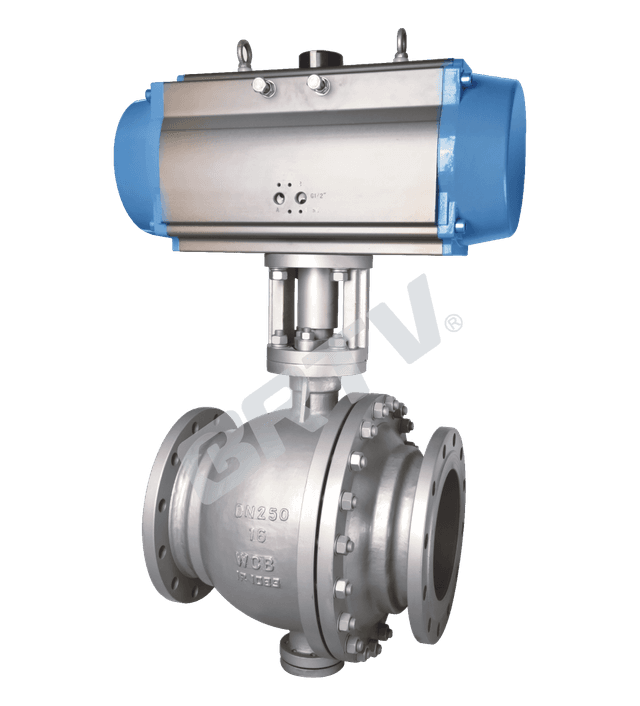
A Flanged Ball Valve utilizes standardized flange connections for installation, adhering to specifications such as ANSI, DIN, or JIS. This connection method provides high structural integrity and facilitates easy removal from the pipeline for inspection or repair. These units are available in a broad range of materials, including carbon steel, stainless steel, and specialized anti-corrosive plastics, catering to various temperature and pressure ratings in process plants.
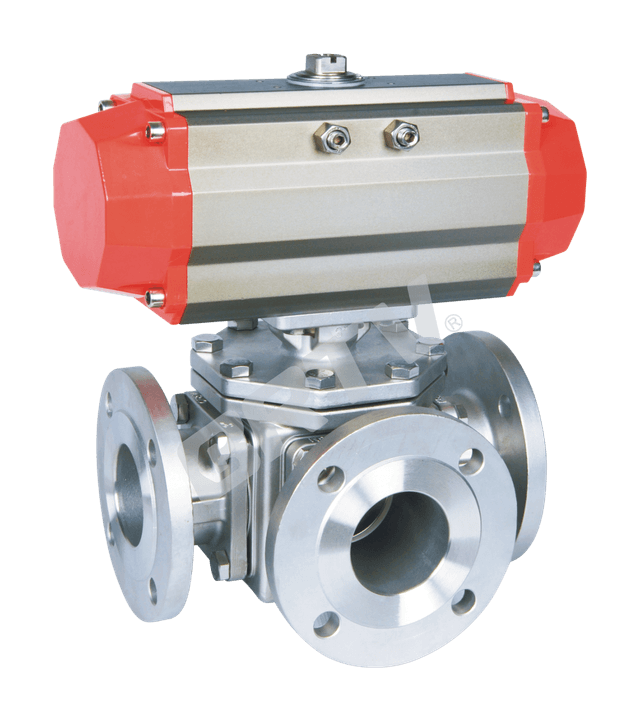
2.4 Three Way Ball Valve
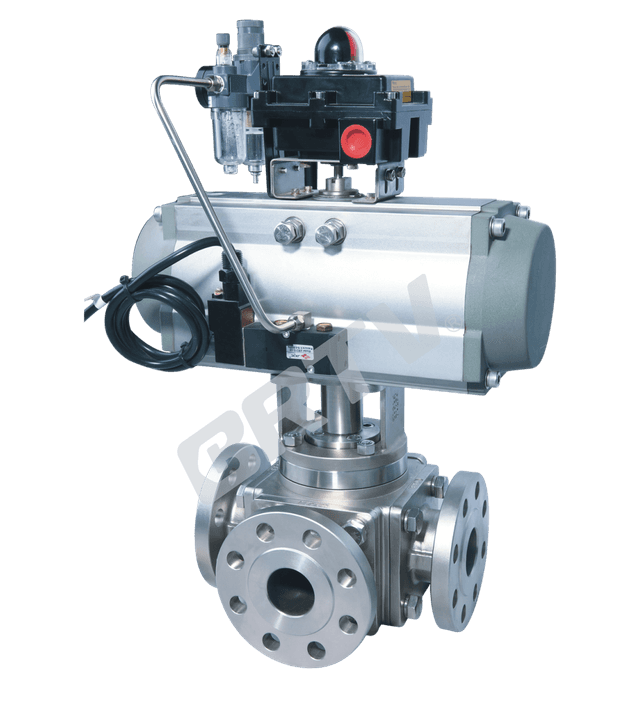
To facilitate flow diversion or mixing, the Three Way Ball Valve employs an L-port or T-port internal configuration. An L-port design allows for the switching of flow between two different outlets, while a T-port design can connect all three ports or switch between various flow paths. This versatility eliminates the need for multiple two-way units and complex piping arrangements, streamlining system layouts in cooling loops and bypass applications.
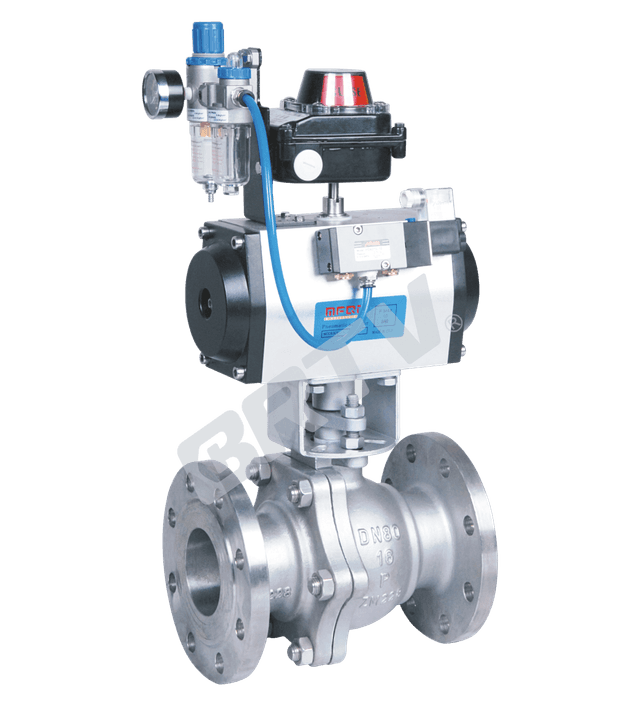
2.5 Pneumatic Ball Valve
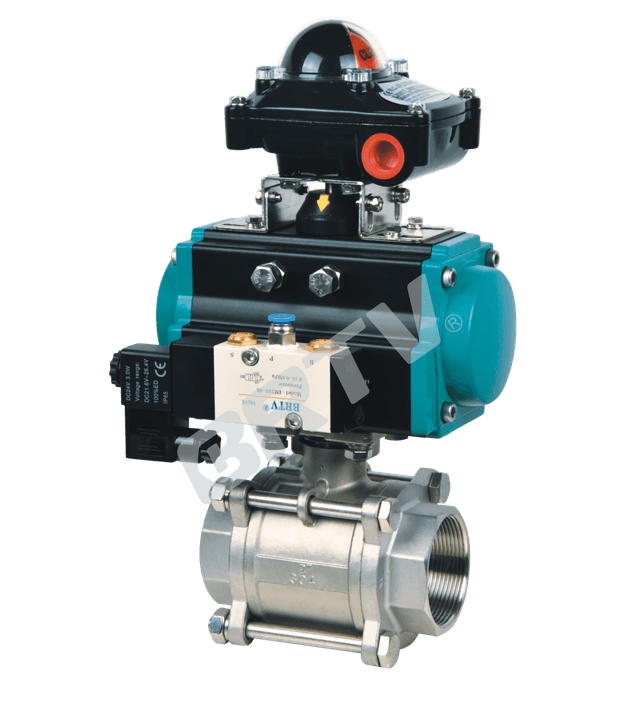
The Pneumatic Ball Valve integrates a quarter-turn body with a high-performance pneumatic actuator, such as the AT series. These actuators can be configured as double-acting or spring-return (fail-safe) models. When paired with accessories like solenoid valves and limit switches, they provide rapid response and reliable automation for emergency shutdown or frequent cycling in automated production lines.
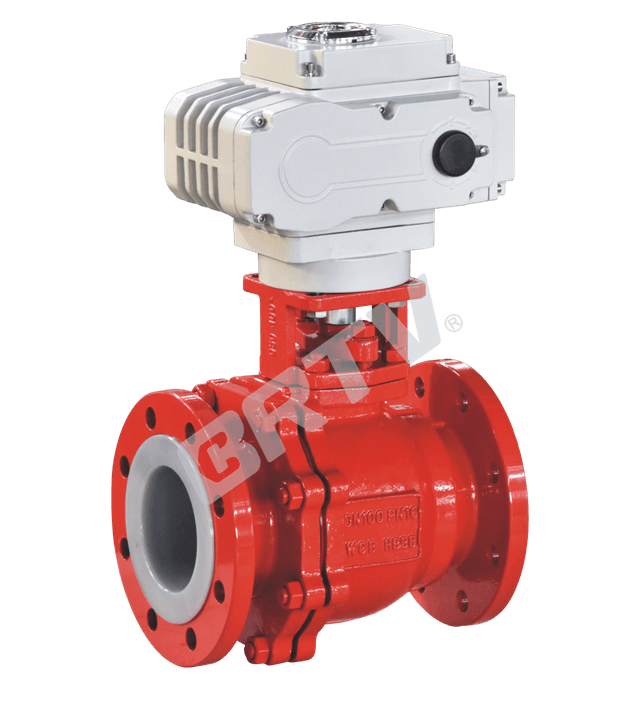
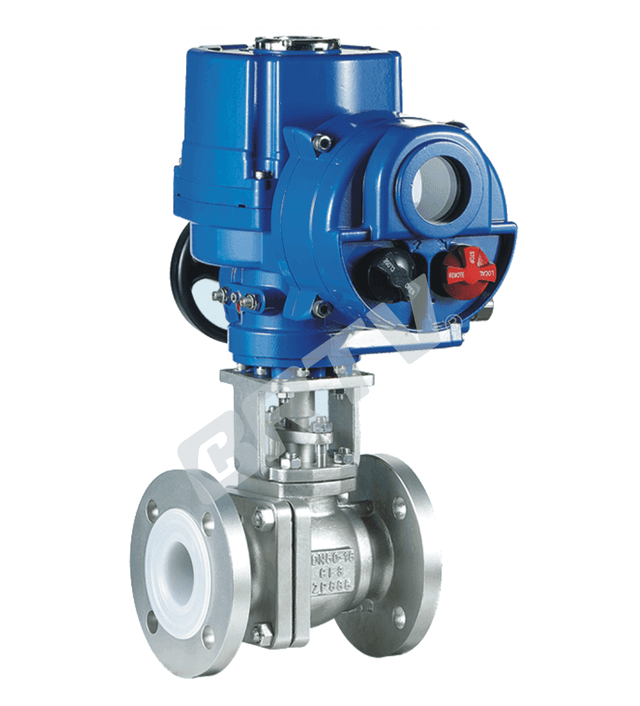
2.6 Electric Ball Valve
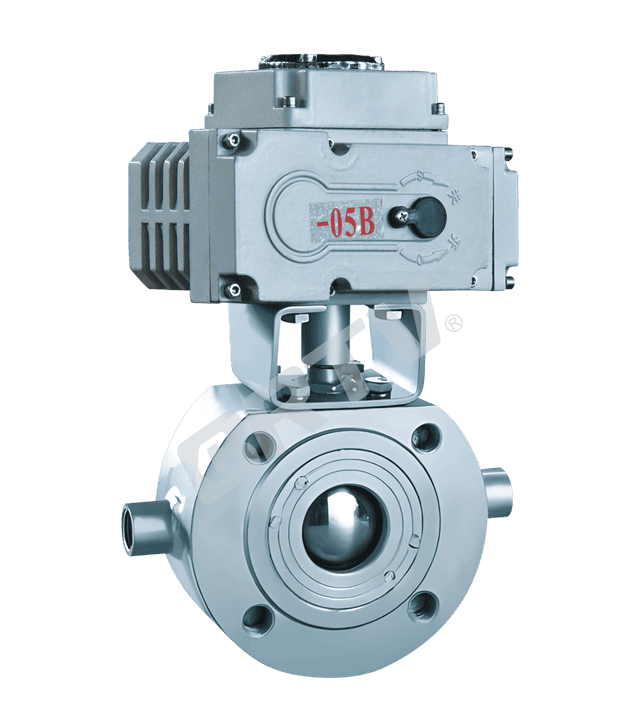
An Electric Ball Valve utilizes a motorized actuator to drive the stem. This configuration is ideal for locations where compressed air is unavailable or where precise electronic positioning is required. The actuators often support various voltages and control signals (such as 4-20mA), enabling seamless integration into centralized control systems for intelligent fluid management and remote monitoring.
3. Advantages of ball valves
1) Superior sealing and durability
The tight contact between the sphere and the seat ensures bubble-tight shut-off, which is critical for preventing leakage of hazardous or expensive media. The use of high-quality materials like PTFE for seats or hardened alloys for metal-seated versions extends the service life even in abrasive or high-temperature conditions.
2) Corrosion resistance and material diversity
The availability of non-metallic options like UPVC, CPVC, and PVDF allows these devices to handle highly aggressive chemicals, including strong acids and alkalis. Metal versions in CF8 or CF8M provide the necessary strength and temperature resistance for steam and oil applications, offering a comprehensive solution for any industrial environment.
3) Minimal maintenance and easy automation
With fewer moving parts compared to gate or globe patterns, these units require less frequent maintenance. The standardized mounting interface facilitates the quick installation of pneumatic or electric actuators, allowing for a transition from manual operation to full automation with minimal downtime.
4. Ball valve selection guide
1) Media and temperature compatibility
Selection must begin with an analysis of the fluid's chemical properties and the operating temperature range. Plastic materials like PPH are suitable for basic chemical transport, while PVDF is preferred for ultra-pure water or high-temperature corrosive fluids. For high-pressure steam or petrochemicals, carbon or stainless steel bodies are required.
2) Pressure ratings and leakage classes
The chosen equipment must meet the design pressure of the piping system. It is essential to verify that the seat material can withstand the maximum differential pressure while maintaining the required leakage class. Specialized testing ensures that each unit performs reliably under the specified service conditions.
3) Automation and control requirements
If the application requires remote operation, the choice between a Pneumatic Ball Valve and an Electric Ball Valve depends on the available power source and the required action speed. Consideration should also be given to fail-safe requirements, necessitating spring-return actuators for critical safety functions.
5. Industry standards and compliance
Quality assurance is maintained through adherence to international design and manufacturing standards. Production processes often comply with ISO 9001 for quality management, while products may carry certifications such as CE for the European market and TS (Special Equipment Manufacturing License) for domestic industrial safety. These standards ensure that wall thickness, pressure ratings, and material properties meet rigorous safety and performance criteria.
6. Typical application scenarios
The versatile nature of these devices makes them indispensable in various fields. In the chemical and chlor-alkali industries, plastic versions handle aggressive media with ease. The lithium battery and copper foil industries utilize V-type models for precise control of slurries. In water treatment and environmental protection, flanged and union designs provide reliable isolation for filtration and distribution skids. Additionally, automated versions are widely used in power generation, shipbuilding, and pharmaceutical manufacturing to ensure precise and safe fluid handling.
7. Frequently asked questions (FAQ)
1) What are the main benefits of using a V-type Ball Valve for control?
The V-notch allows for precise flow modulation and provides a shearing effect that cleans the seat, preventing the buildup of solids or fibers.
2) When should PVDF be selected over other plastic materials?
PVDF should be chosen when the system handles highly corrosive chemicals at elevated temperatures or requires high purity, as it offers superior chemical resistance and thermal stability.
3) Can a Pneumatic Ball Valve be used for throttling?
While primarily used for on-off service, when equipped with a positioner, these units can provide effective modulating control for many industrial processes.
4) What is the difference between an L-port and a T-port in a Three Way Ball Valve?
An L-port is used for diverting flow between two outlets, while a T-port allows for more complex mixing, diverting, or connecting all three ports simultaneously.
5) Why is a Floating Ball Valve preferred for smaller pipelines?
The floating design is cost-effective and provides an excellent seal at lower pressures, making it highly efficient for standard utility and chemical lines.