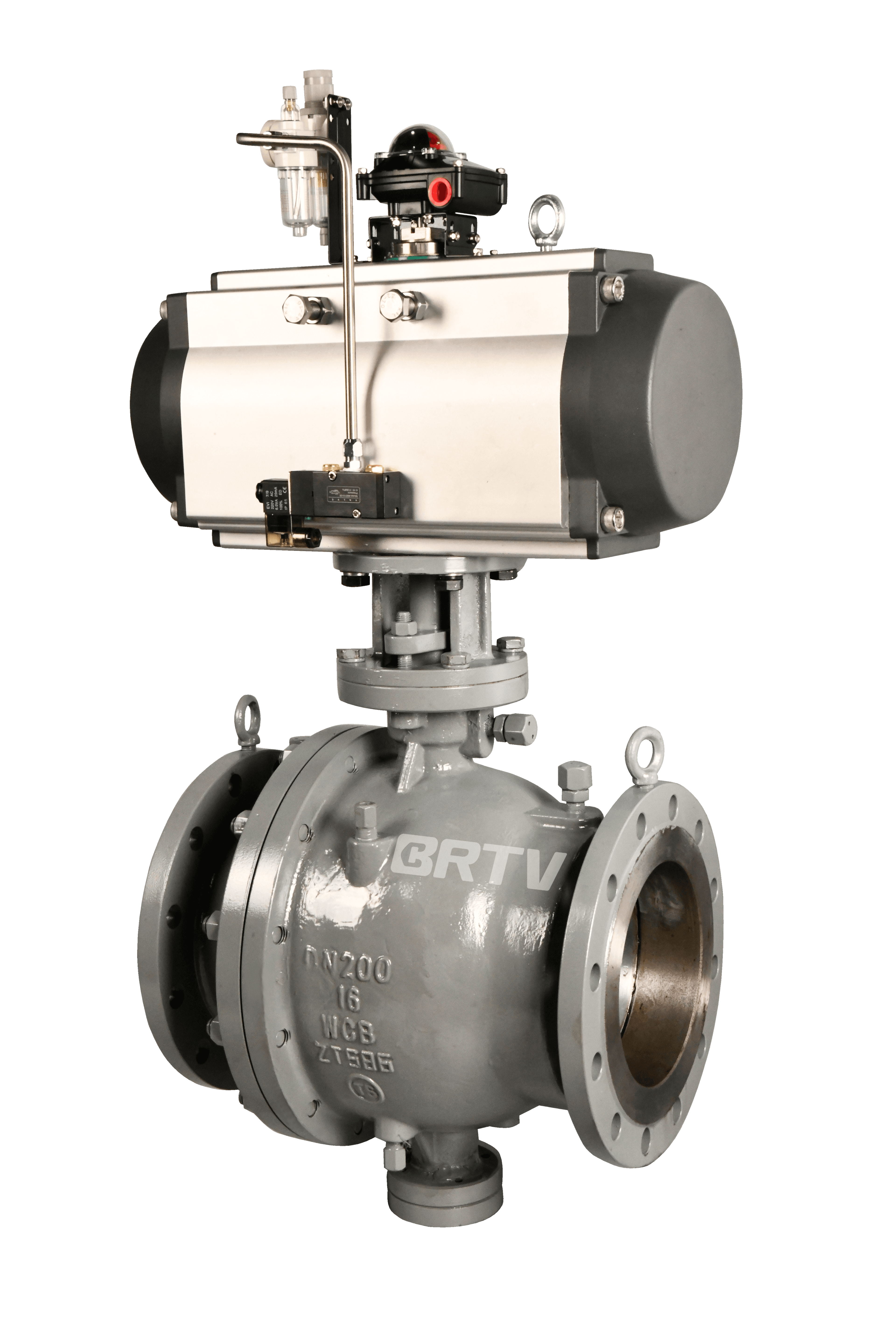
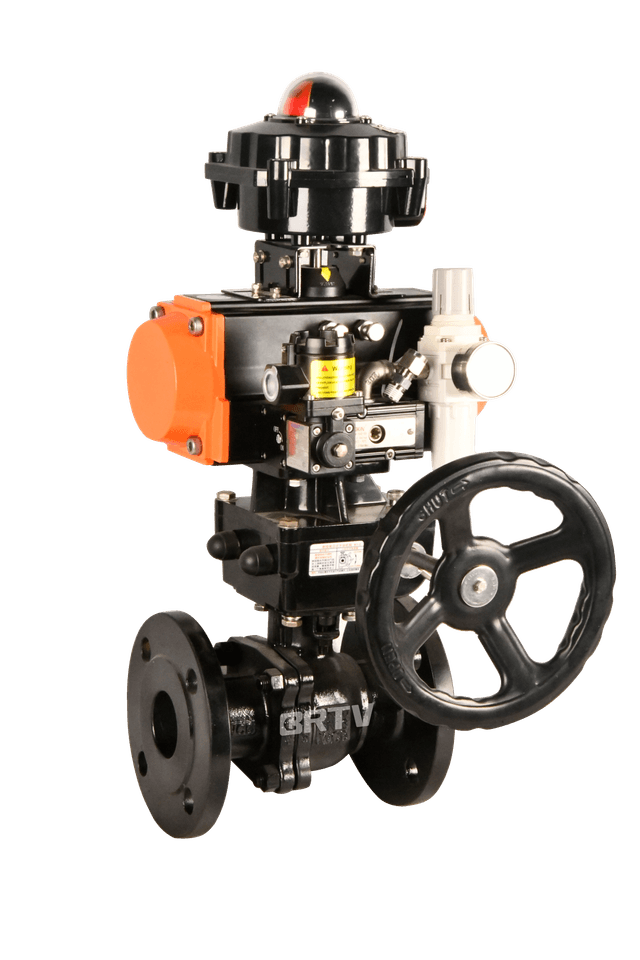
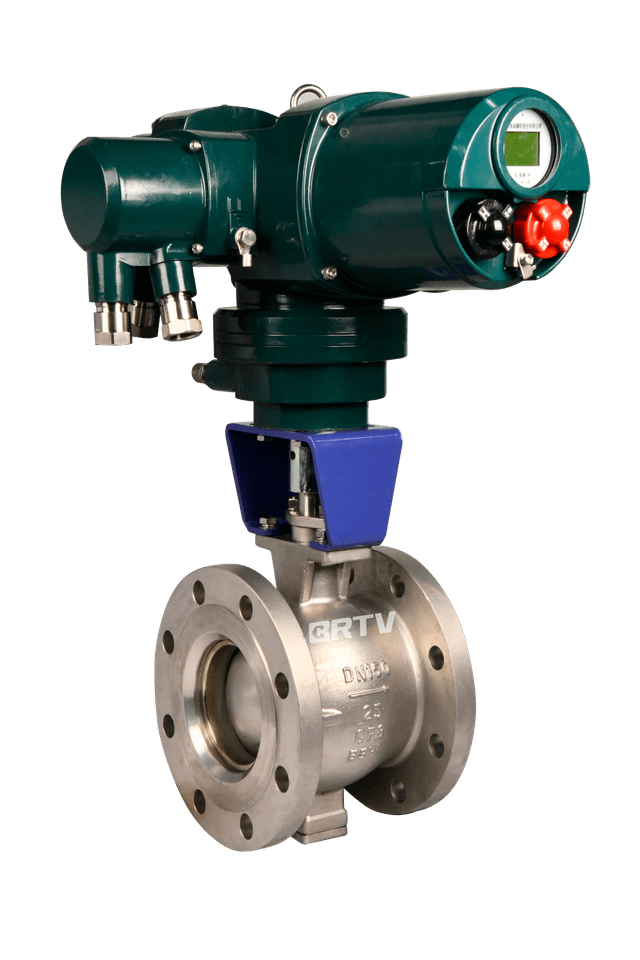
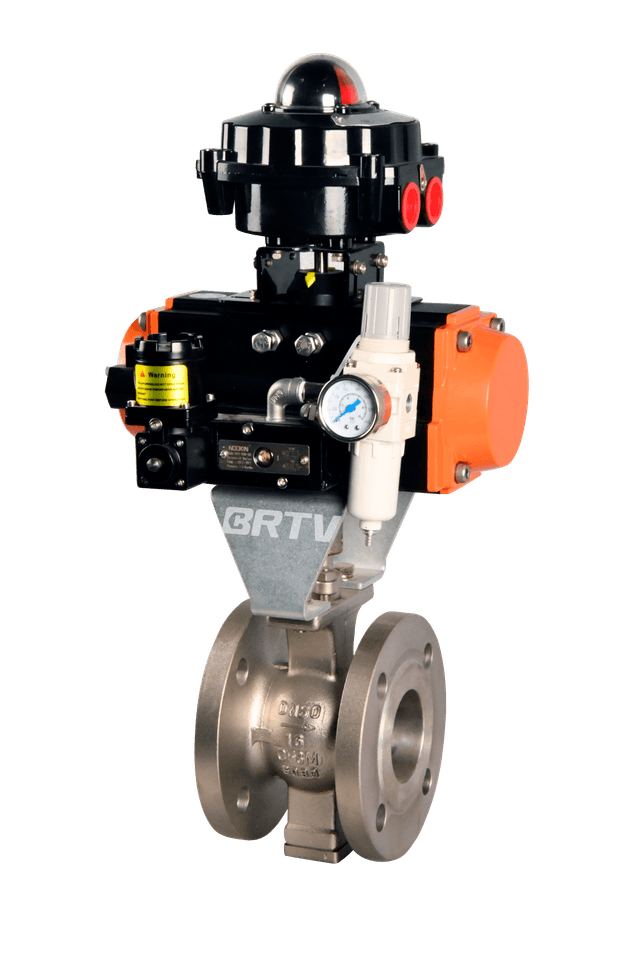
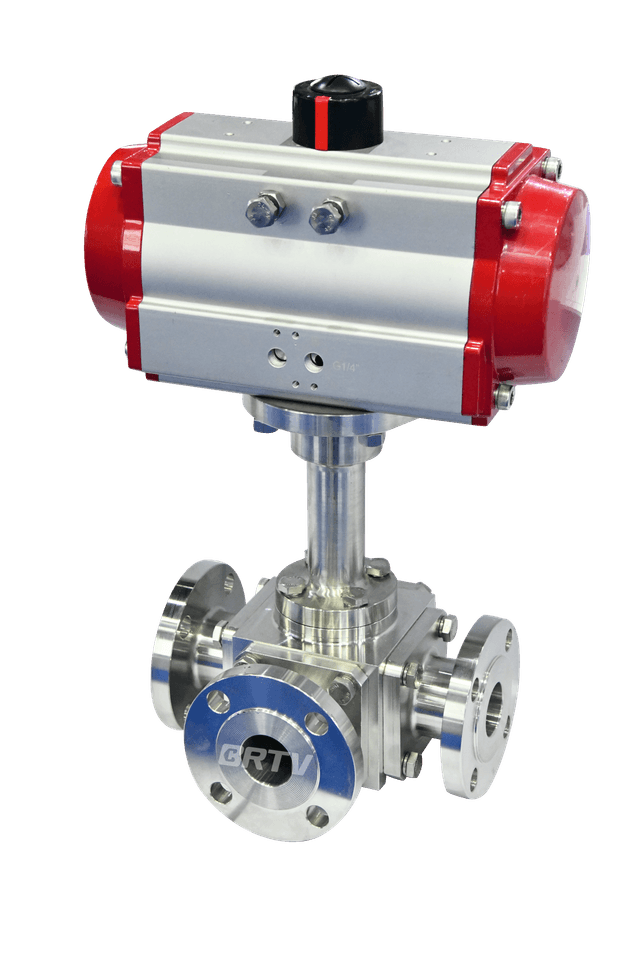
1. What is Pneumatic Ball Valve?
A pneumatic ball valve is a cornerstone automation component in modern industrial fluid control systems. It integrates a high-precision rotary isolation mechanism with a pneumatic actuation device, utilizing compressed air as the power source to drive the internal spherical closure member through a ninety-degree rotation. This design allows the equipment to provide not only excellent sealing performance but also rapid shut-off or switching capabilities on automated production lines.
But unlike a manual operation, this pneumatic actuator can be fitted with attachments such as solenoid valves or limit switches for remote monitoring and control. Typically, it includes a housing that has an internal sphere machined to high tolerances as well as individual seating surfaces with sealing glands and is operated by pneumatic actuation (such AT or GT series). From pure water systems to those delivering highly corrosive chemical media, this device outperforms due to its durability and adaptable configurations. With a design that often complies with international standards like GB, ANSI and JIS; this results in great adaptability to work ideally within several industrial conditions.
2. How a Pneumatic Ball Valve Works?
Pneumatic actuation and the internal mechanical configuration are key to operation of this equipment. 2) When compressed air flows into the actuator housing, normally through rack pinion or scotch yoke mechanism High pressure of the coming enters directly to pistons and produces linear motion which is then converted again in rotatory moment by mechanical transmission.
The core operational process is as follows:
- Opening Phase: As the air supply pressure increases and acts on specific chambers of the actuator, the drive shaft turns the stem. The internal sphere rotates accordingly, aligning its bore completely with the pipeline axis, allowing fluid to pass with minimal resistance and extremely low pressure drop.
- Closing Phase: By reversing the airflow direction or relying on internal spring return mechanisms, the sphere rotates ninety degrees. At this point, the solid face of the sphere seals against the downstream seat. In floating designs, the media pressure further pushes the sphere into the seat to create a tighter seal.
- Safety Protection: The stem is designed with an anti-blowout feature. An integral shoulder at the bottom of the stem uses internal pressure to lock it securely within the body, preventing the stem from being ejected even under extreme high-pressure conditions or if the packing gland fails.
Furthermore, to prevent fires or explosions caused by static electricity generated by friction, many models are equipped with anti-static devices. These use spring-loaded plungers to establish a continuous conductive path between the sphere, stem, and body.
3. Types of Pneumatic Control Units
3.1 Body Structure and Material Classification
Depending on specific industrial requirements, these devices are available in a variety of materials and structural designs:
- Metal Series: Carbon steel (WCB) or Stainless Steel (CF8, CF8M 316L). For applications where there are higher pressures and temperatures such as petroleum, chemical or general industrial circulation system we use these metal units.
- Plastic Series: Designed specifically for highly corrosive environments, with materials including PVDF, PPH, UPVC, CPVC, and FRPP. The PVDF models, noted for their excellent resistance to high-temperature acids and alkalis, are a preferred choice for semiconductor and chemical production lines.
- Structural Forms: These include one-piece (integrated casting), two-piece (split body for easier maintenance and full bore), and three-piece designs. The three-piece structure allows for the replacement of internal seals without removing the pipe connections.
3.2 Functional Channel Variations
The internal bore geometry of the sphere determines the specific function of the device:
- O-Type Design: Features a simple circular hole through the center, primarily used for full-bore opening or closing of fluid paths.
- V-Type Design: Features a sphere with a V-shaped notch. This structure provides excellent flow characterization and creates a shearing effect during closure, allowing it to handle media containing fibers or small particles.
- Multi-port Design: Such as three-way L-port or T-port configurations, used for flow diversion, merging, or switching.
4. Core Advantages of the Pneumatic System
4.1 Superior Sealing and Safety Standards
Quality control units pay attention to the speed of operation as well as safety in tough environments
- Bi-directional Sealing: precision machined PTFE or filled RPTFE seats assure * bubble tight integrity for both directions of flow.
- Fire-Safe Standards: In applications where a flammable media is being handled, these devices often meet fire test standards such as API 607. If the primary soft seats overheat and lose integrity, a sphere will shift to an alternate metal sealing surface inside of another designated geometry—thus preventing leakage.
- ISO 5211 Mounting Pad: In most applications, the actuator is mounted using the ISO 5211 standard flange to maintain full interchangeability between different brands and types of pneumatic or electric actuators
4.2 Material Durability and Component Configuration
| Component | Example Materials | Performance Advantage |
|---|
| Body | PVDF, WCB, CF8M | Balances structural strength with chemical resistance |
| Internal Sphere | Stainless Steel (Chrome plated), PPH | Smooth surface reduces operating torque |
| Sealing Seats | PTFE, RPTFE, PEEK | Excellent chemical resistance and low friction coefficient |
| Actuator | Aluminum Alloy (Hard Anodized) | Lightweight with corrosion protection |
In industries such as lithium battery and semiconductor manufacturing, using pure PVDF materials effectively prevents metal ion contamination, ensuring the cleanliness of the production process.
5. Industrial Applications
Due to their rapid response, high-frequency operation, and excellent sealing, these devices are widely deployed in critical industrial processes:
- Chemical and Pharmaceutical — Control of Acids, Alkalis, Solvents. PWDF and CPVC units are designed so that they do not lose performance in the face of a complex fiber attack.
- Lithium battery and semiconductor: Used in ultrapure water, electrolyte for high purity industry Incorporated plastic pneumatic gathering with no dead zones in the flow path, reducing particle build up.
- Water Treatment and Environment Protection:UPVC,FRPP material is generally used in sewage treatment ,desalination agent,and exhaust gas scrubbers for its low prices and chlorine resistance.
- Metal flanged models are some designed for natural gas transmission, refined oil distribution and different shut off points in refineries to help keep operators safe when under high pressure. Oil Exchange — These valves utilize a Stainless Steel Flange along with Y-type or way ball designs that retrofitted between the valve platform as well fitting most any place needing ISO10423 Type Accreditation to source robust flow isolation equipment where beneficial .