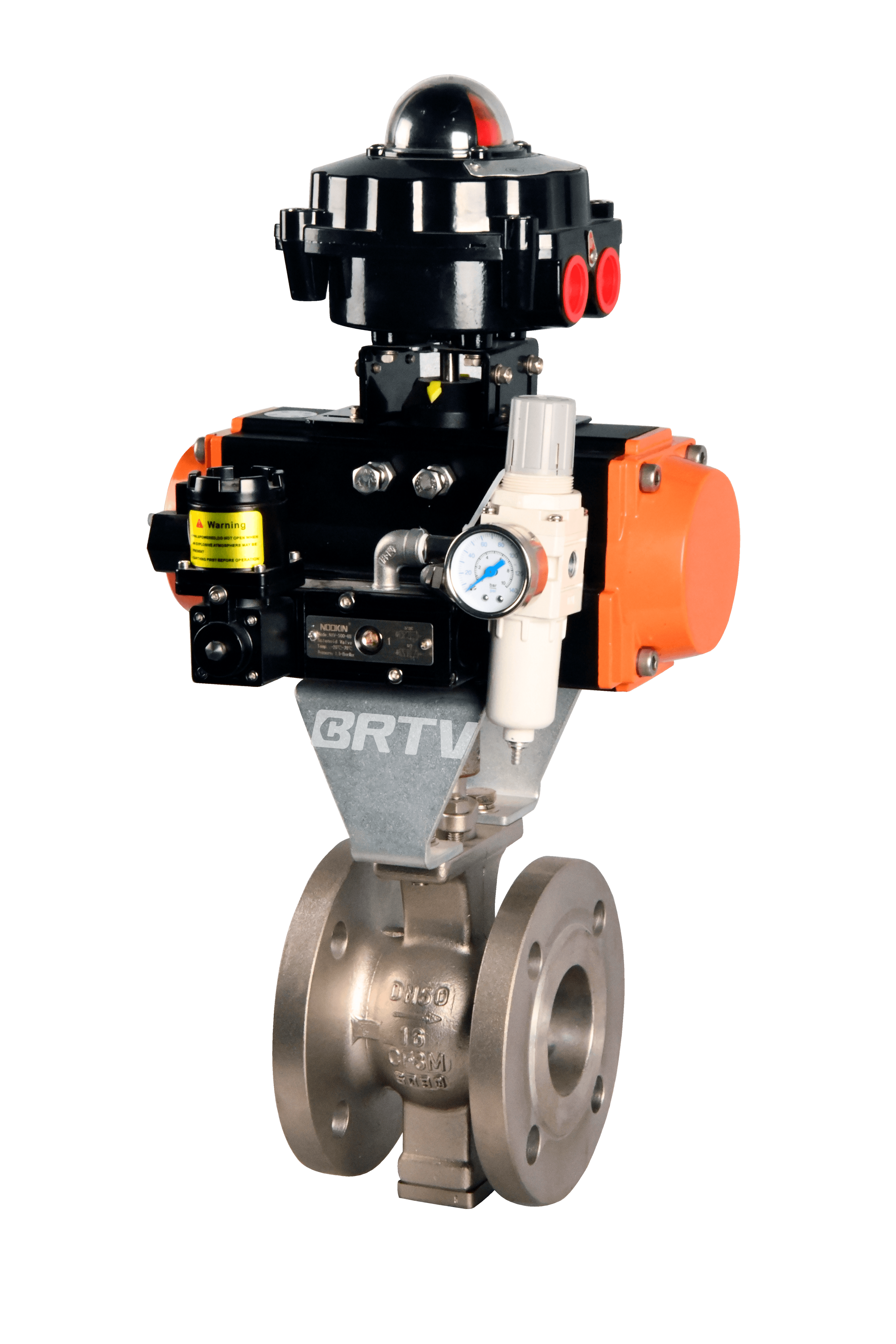
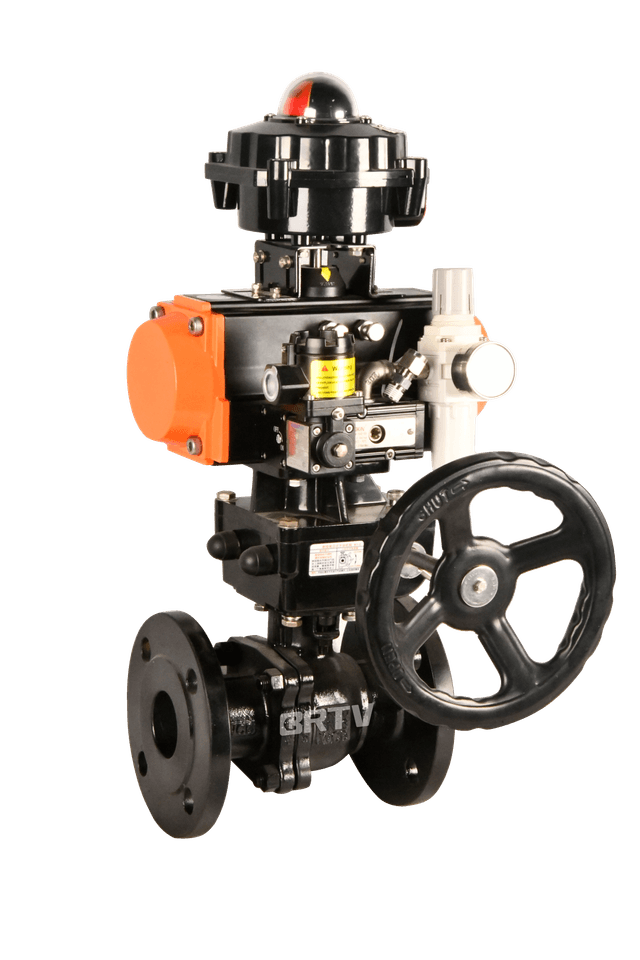
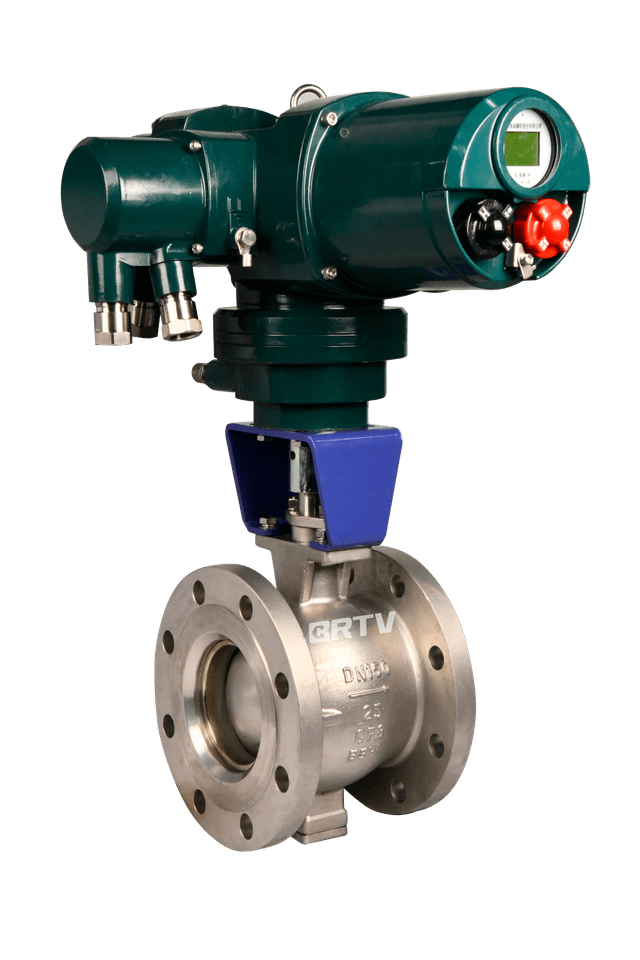
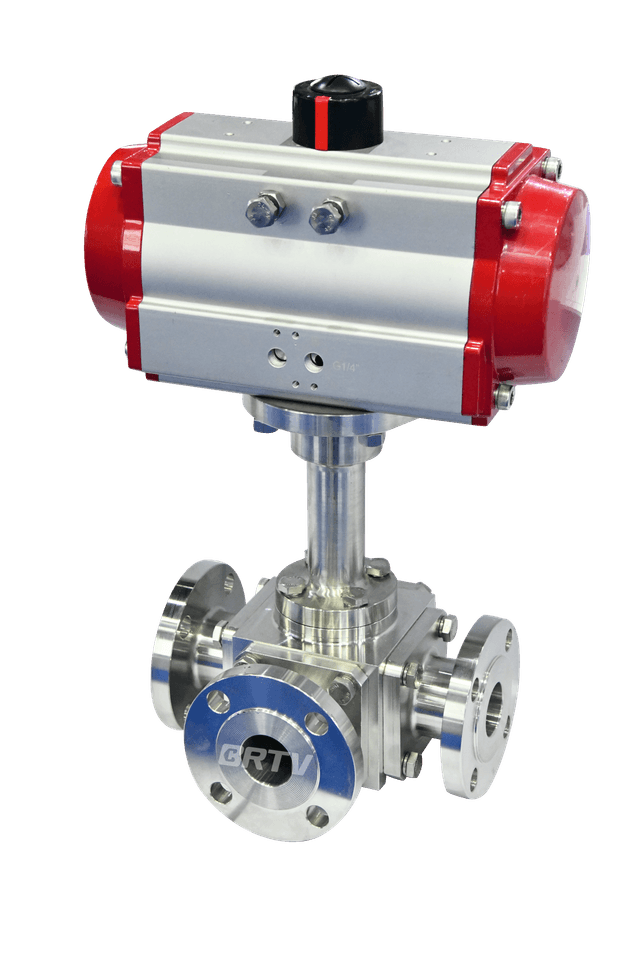
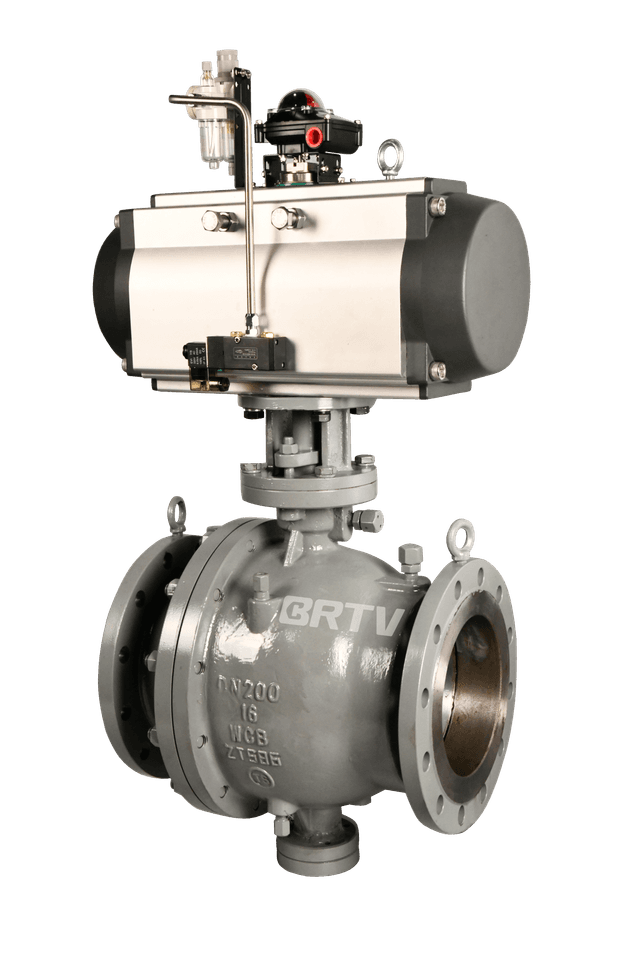
1. What is Flanged Ball Valve?
Simply stated, a flanged ball valve is an important type of industrial flow control parts as it indicates the mounting form and Spherical inner device. In contrast to threaded or socket-weld versions, this particular configuration features incorporated flanges at each end of the body so that it can be well and truly bolted on pipeline bodies. However, this type of construction is extensively practiced in medium-large size piping systems where installation simplicity/maintainability/structural integrity considerations are predominant.
Essentially, the valve is a quarter-turn isolation device. The polished bowl opens or closes fluid flow when a 90 degree turn is activated. It also utilizes a flanged connection to create an unbreakable seal that can be removed from the line without cutting any pipes — this is vital in high-stakes industrial settings. Housings can be made from a range of materials with wide media compatibility, running the gamut from clean water and air to highly corrosive chemicals or slurries.
Made out of high-quality metal or cutting-edge industrial plastics, a flanged ball valve is made to satisfy the most challenging international standards such as GB, and ANSI; JIS. This has resulted in it being a common choice for automating systems and, often serves as the main ON/OFF or modulating valve within extensive process loops.
2. How a Flanged Ball Valve Works?
The operational logic of a flanged ball valve is centered on simplicity and efficiency. When the operator or an automated actuator turns the stem, the internal sphere rotates. In the open position, the hollow bore aligns with the flow path, resulting in minimal pressure drop and high flow capacity. Upon a ninety-degree rotation, the solid face of the sphere covers the flow path, achieving a bubble-tight seal.
There are two primary mechanical configurations regarding the sphere's movement:
- Floating Design- In this, the sphere is not fixed bottom part Instead, it is double ring sealed. Upstream pressure against the sphere actually tightens it slightly towards seats downstream, which boosts sealing force when valve is closed. Vintage requires pressure class for classification, and this pressure-assisted mechanism is ideal.
- Fixed (Trunnion) Design — For high-pressure or large-diameter applications, a trunnioned sphere hinges at the base and is linked to the stem atop it. In this way, the sphere movement is prevented and operating torque of ball valve starts to decrease which leads to minimum wearing on seats.
The interaction between the sphere and seats, which are usually made of reinforced polymers has a large stake in how good the sealing performance is. In addition, the stem features an anti-blowout shoulder for added security under high internal pressure conditions. In the modern plant, this is now made automatic with pneumatic or electrical actuators positioned on top of a flange to create remote control automation.
3. Types of Flanged Ball Valves
3.1 Structural Variations
The physical configuration of the flanged ball valve is often dictated by the specific needs of the piping layout and the frequency of required maintenance.
- One-Piece Body: This design features a compact, integrated housing with fewer potential leak paths. It is often used for reduced-bore applications where space is limited.
- Two-Piece Body: This is the most prevalent structure for flanged units. It consists of a main body and a secondary adapter. This split-body design allows for easier internal inspection and a full-bore flow path, which matches the internal diameter of the pipe.
- Three-Piece Body: While less common in flanged styles compared to threaded ones, some heavy-duty industrial models use a three-piece design to allow the center section to be removed for seat replacement without disturbing the flange connections.
3.2 Functional Classifications
The internal geometry of the sphere determines the application type:
- O-Type Design: Featuring a simple circular hole, this version is primarily used for on-off isolation service.
- V-Type Design: These units have a V-shaped notch in the sphere, which allows for precise flow characterization and modulation. This makes them suitable for regulating the flow of viscous media or fluids containing fibers.
3.3 Material Diversity
These components are categorized into two major series based on their chemical compatibility:
- Metal Series: Constructed from materials like Carbon Steel (WCB), Stainless Steel (CF8, CF8M, 316L), or Cast Iron. These are ideal for high-pressure and high-temperature environments.
- Plastic Series: Utilizing advanced polymers like UPVC, CPVC, PPH, PVDF, and FRPP. These are specifically designed for high-corrosion environments where metal would fail, such as in acid-base handling or ultrapure water systems.
4. Advantages of Flanged Ball Valves
4.1 Design Standards and Reliability
High level of Flanged Ball Valve products are designed to conform to international engineering standards. This ensures exact face-to-face dimensions and flange drilling patterns among different vendors, thereby enabling drop-in replacement. Key standards include ASME B16. API 607 testing for fire safety and pressure rating to class ASME B16.34 for metal types.
The designs include elements and functions that feature a lot of innovation such as:
- Anti-static Devices: Provide electrical continuity between the sphere, stem and body of valves in service to prevent static electricity accumulation in hazardous areas.
- Fire-Safe Seating: Secondary metal-to-metal seats are standard on all metal valves to provide standby capability if the primary soft seats melt during a fire.
- Corrosion Resistance: The plastic series, including PVDF and PPH versions time-proof design against various aging or chemical actions have driven them into the semiconductor market as well in most of (if not all) Chemical applications.
4.2 Material Selection for Components
The performance of the flanged ball valve is highly dependent on the synergy of its materials.
| Component | Material Options | Key Characteristics |
|---|
| Body | WCB, CF8, CF8M, UPVC, PVDF | Structural integrity and chemical resistance |
| Sealing Seat | PTFE, RPTFE, PPL | Low friction and superior sealing |
| Stem | 304, 316, 17-4PH | High torque resistance and anti-blowout |
| O-Ring | EPDM, FPM (Viton) | Secondary sealing and environmental durability |
For specialized applications, such as handling strong oxidants or high-temperature acids, the use of PVDF for the body and FPM for the seals provides a robust solution that extends the service life of the equipment.
5. Applications of Flanged Ball Valves
Available This Flanged Ball Valve in wide Range with Awwa & Ansi Standard, the perfect design makes it a well-established cornerstone throughout various industrial sectors. Its exceptional bubble tight sealing and the capability to accept wide range of actuators, it is more popular for automated flow controls.
These are employed to control the flow of aggressive reagents in chemical and pharmaceutical industries. Here it includes the plastic flanged series which are well loved for their non-reactive tendencies. Cost-saving and durable UPVC & PPH versions are the standard for brine lines, filtration systems, and sewage processing in Water Treatment and Environmental Protection.
The Semiconductor and Lithium Battery sectors rely on incredibly pure PVDF flanged ball valve assemblies to prevent fluid contamination through production. They may be vacuum cleaned and packaged in class 10000 clean rooms to satisfy cleanliness specifications.
Furthermore, in traditional sectors like Petroleum, Natural Gas, and Steel Manufacturing, metal flanged units with hard-sealed or reinforced soft-sealed seats are deployed to handle high-pressure transmission and steam service. Whether for simple manual isolation or integrated into a sophisticated PLC-controlled network via pneumatic actuators, the flanged ball valve remains one of the most reliable and efficient components in modern fluid engineering.