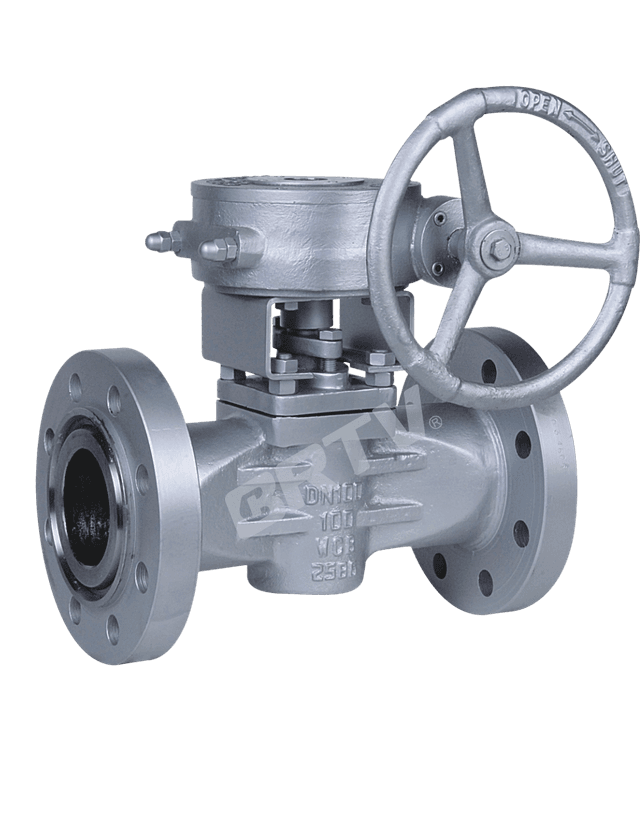
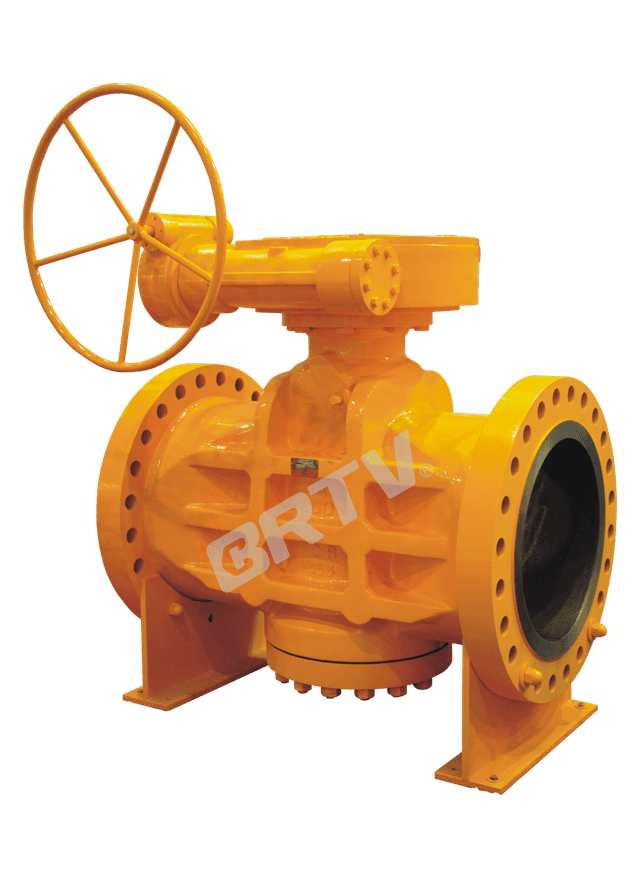
Plug Valve

Explore our comprehensive range of high-performance industrial valves, engineered for reliability and precision in every application.

Showing 6 of 6 results

3 way Plug Valve

Plug Valve

3 way Plug Valve

Read More
4 way Plug Valve

Plug Valve

4 way Plug Valve

Read More
Ferrule Type Plug Valve

Plug Valve

Ferrule Type Plug Valve

Read More
Pressure Balanced Plug Valve

Plug Valve

Pressure Balanced Plug Valve

Read More
Orbit Plug Valve

Plug Valve

Orbit Plug Valve

Read More
Lift Plug Valve

Plug Valve

Lift Plug Valve

Read More

1. Plug Valve working principle

1) Rotary obstruction and port alignment

This equipment utilizes a quarter-turn rotary motion to control flow through a cylindrical or tapered plug. The central component features one or more bored passages that align with the pipeline when the actuator is turned ninety degrees. When rotated to the closed position, the solid part of the internal element blocks the fluid path. This design allows for a very simple and direct flow route, minimizing internal turbulence and providing a reliable shut-off mechanism that is well-suited for various industrial media.

2) Sealing through surface contact

The seal in this category of hardware is achieved through a high-degree of surface contact between the rotating plug and the stationary body. In non-metallic configurations, materials such as PPH, CPVC, or PVDF are used to create a corrosion-resistant interface. The mechanical fit is often enhanced by a sleeve or specialized lining that reduces friction during rotation while maintaining a bubble-tight seal. This tight-fitting contact ensures that the unit can handle slurries and fluids with suspended solids without the risk of particles getting trapped in the sealing area.

3) Multi-port flow redirection

Unlike standard linear valves, the internal geometry of these units allows for multiple ports within a single body. By modifying the bore shape of the internal plug, the device can be configured to divert or mix flow between different pipes. This multi-way capability reduces the number of individual units required in a complex piping system, simplifying the layout and reducing the total number of potential leak points in chemical and processing installations.

2. Plug Valve product type classification

2.1 3 way Plug Valve configuration

The 3 way Plug Valve is designed for diverting or mixing applications. It features three separate connection ports and is typically available in T-port or L-port internal configurations. This allows the operator to switch flow between two different outlets or combine two incoming streams into one. It is an essential component in chemical processing and water treatment systems where flow redirection is a frequent operational requirement.

2.2 4 way Plug Valve design

For more complex fluid circuits, the 4 way Plug Valve provides four ports and multiple flow patterns. This configuration is particularly useful in systems requiring frequent reversal of flow or the switching of media between different processing loops. The compact design of this multi-port unit replaces several standard valves and fittings, offering a space-efficient solution for automated production lines and lithium battery manufacturing facilities.

2.3 Orbit Plug Valve mechanism

The Orbit Plug Valve incorporates a specialized tilt-and-turn action that eliminates seat friction during the opening and closing cycles. During operation, the internal plug is mechanically retracted from the seat before it begins to rotate. This "frictionless" movement significantly extends the service life of the seals and reduces the torque required for operation. It is the preferred choice for high-frequency cycling and critical isolation tasks where long-term reliability is paramount.

2.4 Lift Plug Valve style

The Lift Plug Valve utilizes a lifting mechanism that pulls the plug away from the seat before rotation occurs. Once the rotation is complete, the plug is lowered back into the seat to form a tight mechanical seal. This lifting action protects the sealing surfaces from wear and erosion caused by the medium, making it highly effective for high-temperature services or fluids containing abrasive particles. It ensures a high level of sealing integrity even in demanding industrial environments.

2.5 Pneumatic automation integration

Automated versions of these units are frequently equipped with AT or GT series pneumatic actuators. These actuators utilize compressed air to provide the necessary quarter-turn torque, supporting both double-acting and spring-return (fail-safe) modes. When integrated with solenoid valves and limit switches, the assembly can be fully synchronized with an industrial control system, enabling rapid and precise flow management in large-scale automated plants.

2.6 Electric drive units

For applications where compressed air is not available or where slow, steady control is needed, electric actuators are employed. These motorized units provide high-precision rotation and can be controlled via standard 4-20mA signals. The use of electronic actuators allows for remote monitoring and intelligent diagnostic capabilities, which are essential for modern smart factories and remote water distribution networks.

3. Advantages of the rotating plug design

1) High durability and erosion resistance

The large seating area and simple internal structure make these devices exceptionally durable. Because the sealing surfaces are protected from the direct flow of the medium when the unit is fully open, the risk of erosion is minimized. This ensures a longer service life compared to other designs where critical components remain exposed to the high-velocity stream.

2) Space-efficient multi-port solutions

The ability to integrate 3-way and 4-way flow patterns into a single body provides significant space savings. This compactness reduces the overall footprint of the piping system and simplifies the support structures required. It also lowers the cost of installation by reducing the number of flanges, bolts, and gaskets needed in complex manifolds.

3) Versatile material compatibility

The availability of specialized plastic materials like PVDF and CPVC ensures that these units can handle the most aggressive chemicals. Whether dealing with high-purity water, strong acids, or corrosive slurries, the non-metallic options provide a reliable and cost-effective solution that avoids the corrosion issues associated with standard metal equipment.

4. Selection guide for industrial service

1) Matching flow pattern to application

The primary consideration is determining the required flow logic. For simple on-off service, a standard two-port design is sufficient. However, for diverting or mixing tasks, the 3-way or 4-way options must be selected based on the specific L-port or T-port requirement. Choosing the correct internal geometry is vital for achieving the desired process outcome.

2) Material selection for chemical resistance

Evaluate the chemical properties and temperature of the medium to select the appropriate body and seal materials. UPVC and PPH are suitable for general water and mild chemical services, while PVDF is mandatory for high-temperature and highly corrosive media. Ensuring material compatibility prevents premature degradation and maintains the safety of the entire system.

3) Actuation and control requirements

Determine if the process requires manual operation or automated control. For high-speed safety loops, pneumatic actuators are generally preferred. For remote locations or applications requiring precise modulation, electric actuators offer a more practical solution. Consider the need for fail-safe positions to ensure the system remains in a safe state during a power or air supply failure.

5. Industry standards and compliance

Ensuring reliable performance requires adherence to global manufacturing standards. Design and testing typically follow GB, ANSI, DIN, and JIS protocols to ensure dimensional consistency and pressure rating accuracy. Quality management systems certified to ISO 9001, alongside specialized certifications such as CE for the European market and TS (Special Equipment Manufacturing License), provide assurance that each unit meets rigorous industrial specifications for material purity and wall thickness.

6. Typical application scenarios

This equipment is widely utilized in diverse sectors due to its versatility and robust design. In the lithium battery and copper foil industries, they are used to manage the distribution of electrolytes and chemical slurries. The chlor-alkali and general chemical sectors rely on multi-port plastic variants for handling aggressive acids and alkalis. Water treatment facilities and seawater desalination plants use them for large-scale filtration and flow redirection. Additionally, automated models are critical in pharmaceutical manufacturing and power plant cooling systems, where precise and reliable fluid management is required for continuous operation.

7. Frequently asked questions (FAQ)

1) What is the main benefit of the Lift Plug Valve?

The lifting action eliminates friction between the plug and the seat during rotation, which significantly reduces wear and allows for a tighter seal in high-temperature or abrasive conditions.

2) How do L-port and T-port configurations differ in 3-way units?

An L-port allows the flow to be directed from one inlet to either of two outlets, while a T-port can connect all three ports together or allow for mixing and diverting between various combinations.

3) Can a Plug Valve handle media with solids?

Yes, the large seating area and the wiping action of the plug as it rotates make it very effective at handling slurries and fluids with suspended particles without clogging.

4) When should PVDF be selected over PPH?

PVDF should be selected when the medium is highly corrosive or when the operating temperature exceeds the limits of PPH, as PVDF maintains superior mechanical strength and chemical resistance at higher temperatures.

5) Why are automated versions used in chemical plants?

Automated versions allow for precise, remote control of fluid flows, which is essential for maintaining process safety, improving efficiency, and enabling the integration of complex logic in modern chemical production lines.

WhatsApp