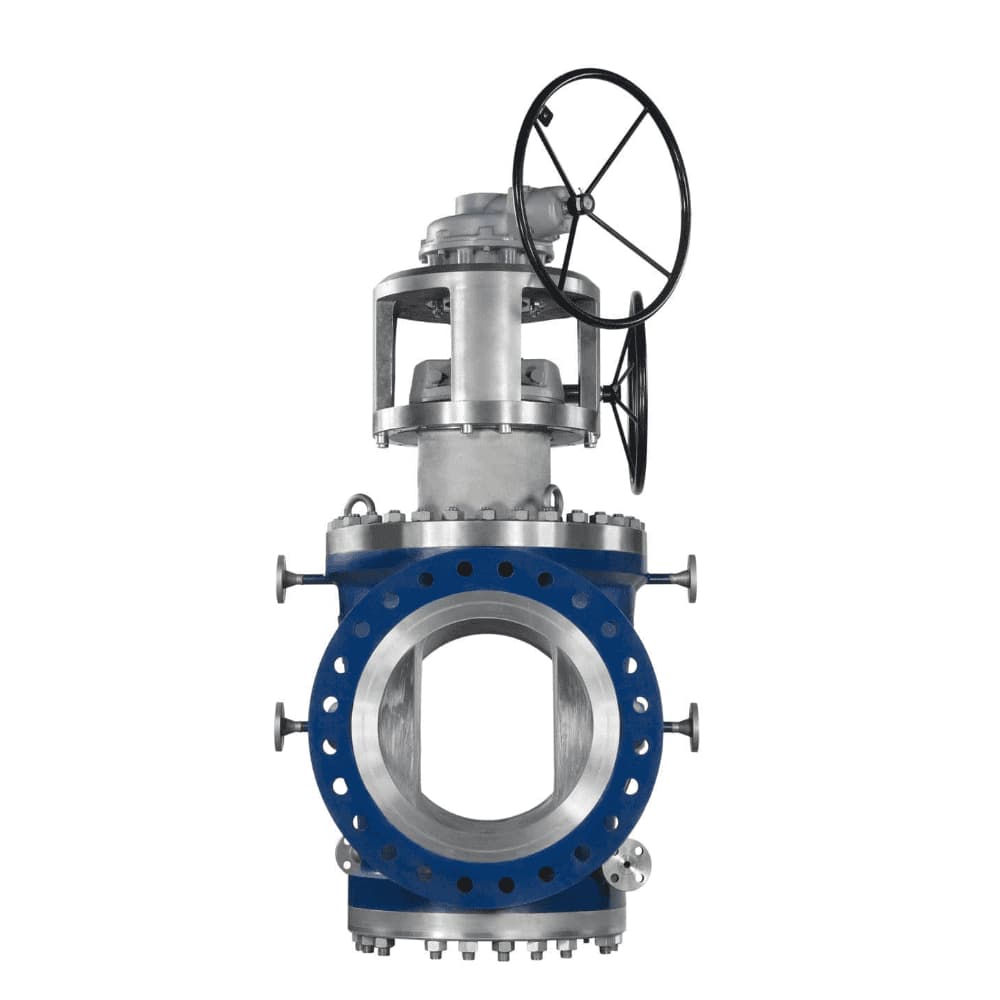
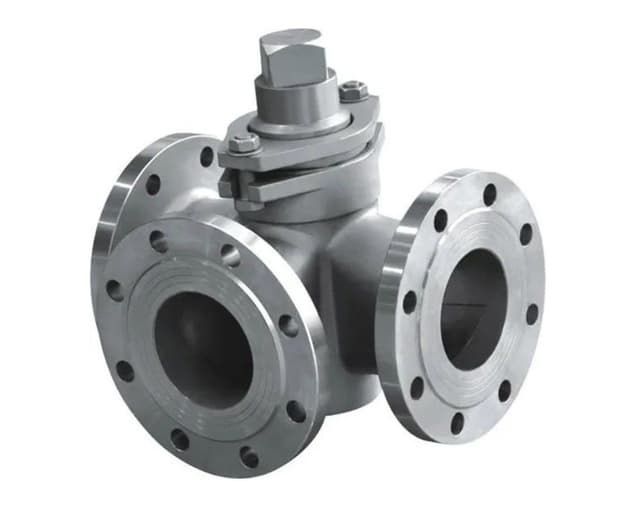
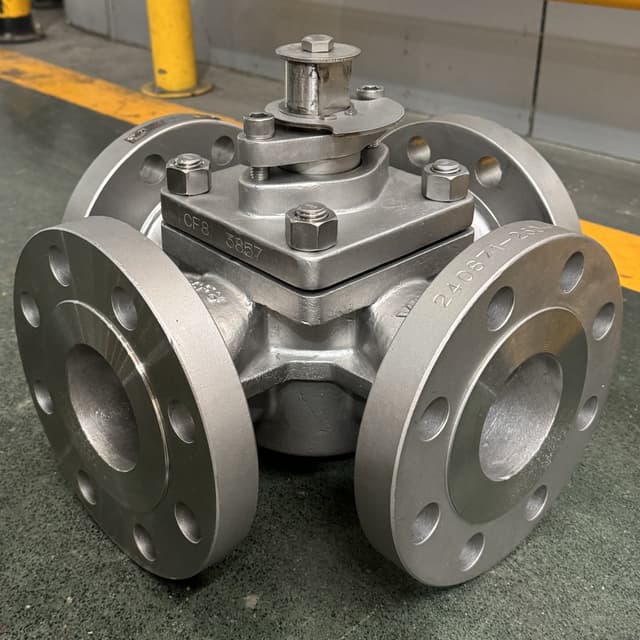
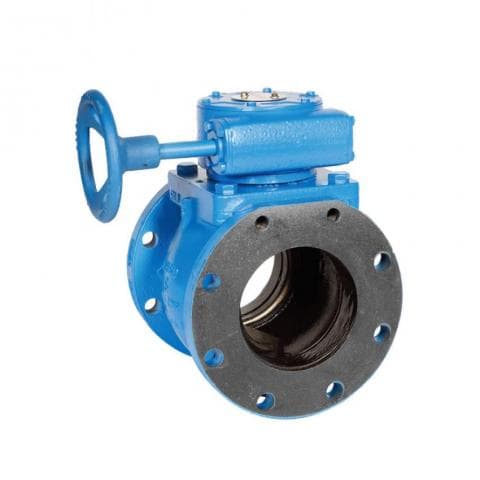
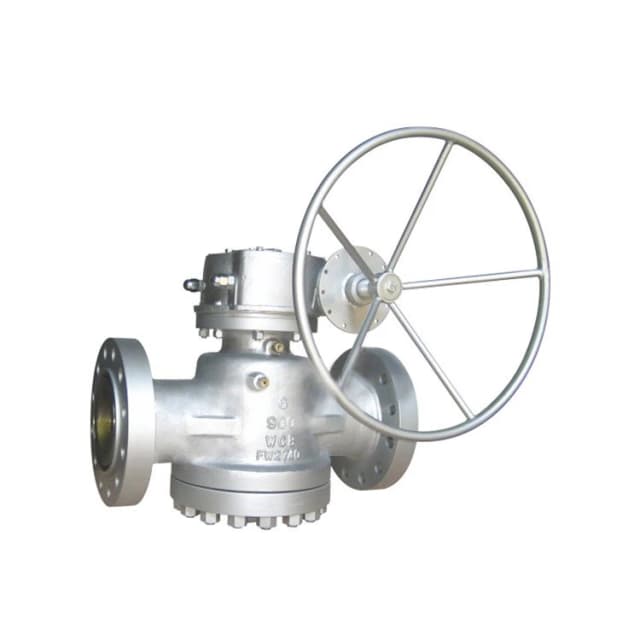
1. What is Lift Plug Valve?
A Lift Plug Valve is a specialized isolation component engineered for heavy-duty industrial applications where friction-free operation and high-integrity sealing are required. This advanced device features a unique mechanical design that lifts the internal core away from the seating surface before rotation, effectively eliminating mechanical wear during the opening and closing cycles. Unlike standard rotary units that remain in constant contact with the seat, this lift-and-turn architecture ensures that the sealing surfaces are protected from the abrasive effects of process media. The construction typically utilizes high-durability materials such as cast steel WCB or stainless steel variants like CF8 and CF8M, ensuring strict compliance with global pressure standards ranging from PN1.0 to PN1.6 MPa.
As a high-performance closure unit, this equipment is frequently utilized in demanding thermal and chemical loops. The internal assembly is designed to handle viscous fluids, corrosive chemicals, and media containing suspended solids without the risk of seizing. Whether configured for manual operation or integrated with a pneumatic execution system, this isolation solution provides a robust barrier that maintains system integrity over a long operational lifespan.
2. How this Lift Device Works?
The operational principle of this industrial assembly centers on a two-stage mechanism that translates mechanical or pneumatic force into a combined vertical and rotary motion. By physically separating the sealing surfaces before moving the plug, the device minimizes the torque required and prevents seat degradation.
The core operational stages include:
- Lifting and Disengagement: The process is initiated by a manual operator or an automated execution unit, such as the AT or GT series pneumatic actuator. This unit generates thrust transmitted through a precision-machined stem, often made from 2Cr13 or 304 stainless steel. The initial motion lifts the internal core vertically, breaking the seal and creating a clearance between the core and the valve body.
- Rotation and Alignment: Once the core is fully lifted, the mechanism initiates a 90-degree rotation. The narrow profile of the internal housing guides the core toward the open or closed position without any surface-to-surface contact. This stage ensures that the flow path is cleared smoothly, even when handling media with high solids content.
- Reseating and Sealing: Upon reaching the desired position, the core is driven back down into the valve seat. High-quality packing materials like PTFE or flexible graphite are utilized around the stem to maintain a leak-free external seal. This mechanical wedging action provides a tight shut-off that can withstand high differential pressures and prevent backflow.
3. Types of Specialized Rotary Units
3.1 Material Classification and Properties
To meet the demands of various chemical and thermal environments, these isolation units are produced in several metallurgical and non-metallic configurations:
Regular Full Port Ball Valve with Carbon Steel (WCB) Series for General Industrial Process. They provide superb structural strength and can work efficiently at temperatures up to the level of four hundred twenty-five degrees Celsius.
Stainless Steel (CF8, CF8M) Series -The models are particularly developed for media which corrode varieties of flow meter materials like oxidation and acid-base reactions. They are used in food processing and specialty chemical industries.
High-Performance Plastic Alternatives: If you need extreme resistance to chemicals, units can be made from choices like PVDF, CPVC or PPH. These are very reliable models used in the processing of strong acids as well as demineralized water which tends to erode metallic components rather quickly.
3.2 Actuation and Control Variants
Pneumatic Automation Systems: Equipped with AT or GT series aluminum alloy actuators, these provide rapid response times and can be integrated into automated plant control loops for efficient process management.
Electric Motorized Systems: Utilizing high-torque electronic actuators, these allow for precise movement and status feedback within a central control room, functioning effectively without the need for compressed air.
Manual Handwheel Operation: Provides a simple and dependable mechanical interface for pipelines where automated remote control is not a requirement.
4. Core Advantages of the Lift System
Many of these features are directly related to the operational lifespan and safety enhancements that an isolated lift-style system can deliver.
The Valve is also designed with a Frictionless sealing by lifting the core prior to rotation removes all friction between seat and plug so there's no wear on either resulting in less maintenance.
Greater Flow Ratings: Internal configuration with high Cv levels that allows process fluid to exit the unit at lower pressure and low turbulence.
Positive Shut-off: The mechanical wedging action provides bubble-tight shut-off that is independent of line pressure so it is equally effective on high or low-pressure applications.
| Component | Example Materials | Performance Advantage |
|---|
| Main Body | WCB, CF8, CF8M, PVDF | Robust design with high pressure rating |
| Internal Core | 304SS, 316SS, Lined Steel | Smooth rotation and corrosion resistance |
| Drive Stem | 2Cr13, 304SS | High strength and wear resistance |
| Stem Packing | PTFE, Graphite | High-integrity external seal under pressure |
| Actuator | Aluminum Alloy (AT/GT) | Reliable remote operation and rapid response |
5. Industrial Applications
This is an all-around assistive component used across many different special industries and that robust features — the flexibility, as well.
- Petro-Chemical and refinery: These units are necessary to separate lines with high temperatures from the hydrocarbons wich, by thermal expansion, cause standard valves do not operate.
- Lithium Battery Production: For precise regulation of electrode slurries and electrolytes to the battery, providing contaminant-free processing free from sticking or wear.
- Mining and Mineral Processing: Reduces wear with abrasive tailings, slurry lines where lifting action obviates solids between sealing surfaces.
- Chemical and Water Treatment: The stainless steel and polymer pumps ensure durability even in harsh chemical mixtures or wastewater sludge, preserving system reliability under challenging conditions.