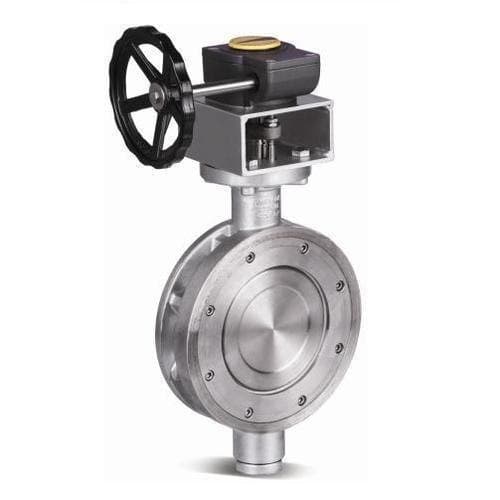
1. What is Pneumatic Butterfly Valve?
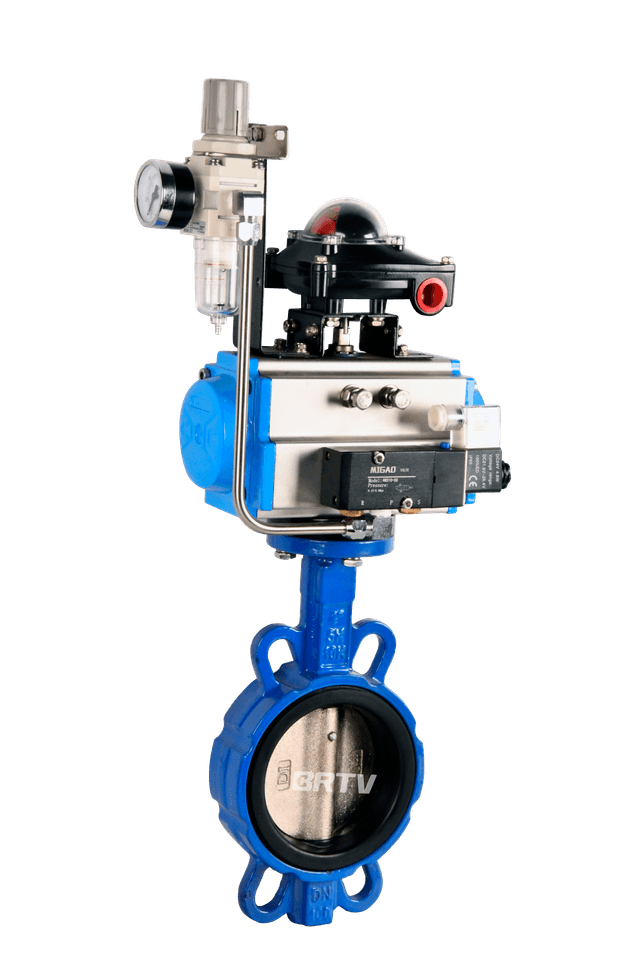
A Pneumatic Butterfly Valve is a high-speed automatic assembly used for ninety degree switch in which the medium flow closed or shaped valve equipment. This apparatus will use compressed air as its main power source and, by employing a specialized rotary disc with pneumatic actuator component to drive the internal mechanism through an exact 90 degree turn. This setup is popular for quick exhaust and low space requirements, typically found in fast acting automation used on modern assembly lines.
Unlike manual flow control units this pneumatic system is very quick and easily interfaces with the outside world through solenoid valves that may connected to a remote management loop via positioners. The hardware is usually comprises a full bore body, ring style stem packing assembly and disk High performance sealing seats with an AT or GT-PEC series pneumatic actuator. It is in conformance with such standard as ANSI, DIN, JIS and GB to maintain a high reliability can handle applications for ultrapure water or highly corrosive industrial chemicals. The idea behind its design is to reduce pressure drop, but at the same deliver a top-notch performance for the fluid transport system on which it is equipped.
2. How this Pneumatic Rotary Device Works?
The operation of this equipment depends on the mechanical synergy between the pneumatic actuator and the internal stem-disc assembly. When air pressure is introduced into the actuator chambers, it acts on pistons to create linear motion, which is subsequently converted into rotational torque via a rack-and-pinion or scotch yoke mechanism.
The core operational stages are as follows:
- Opening Phase: As the pneumatic supply increases, the drive shaft rotates the stem. This movement turns the disc from a closed position to one parallel with the flow. The disc profile is specifically engineered to allow media to pass through the body with minimal turbulence, ensuring a high flow coefficient (Cv).
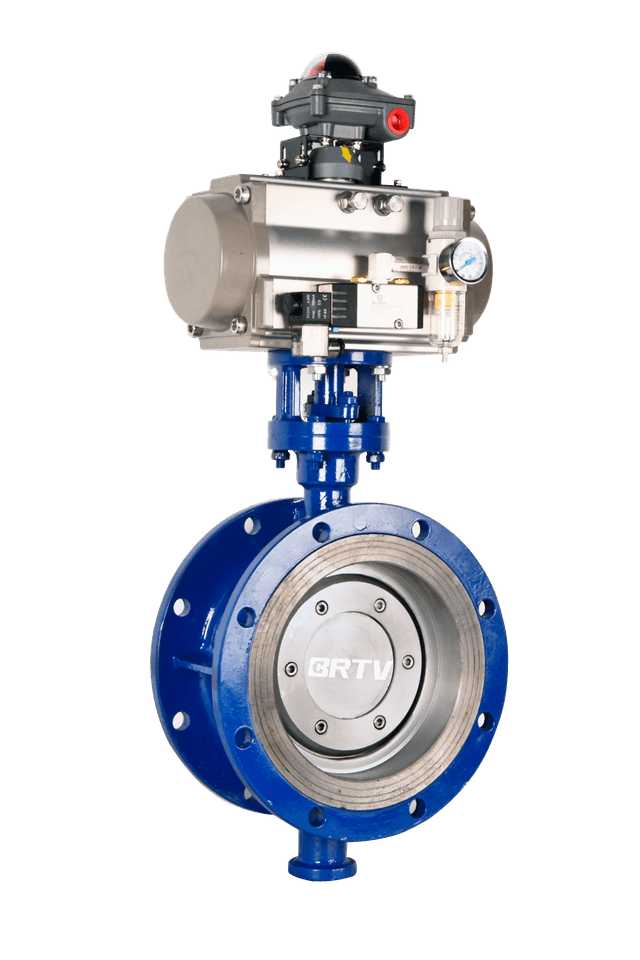
- Closing Phase: Reversing the airflow or utilizing internal spring return sets rotates the disc ninety degrees to meet the seat. In center-lined plastic models, the interference between the polymer disc and the elastic seat creates a bubble-tight seal. In high-performance metal versions, a triple eccentric geometry is often used to ensure the disc wedges into the seat only at the final moment of closure, reducing friction.
- Modulation and Control: For applications requiring precise flow adjustment rather than simple on-off actions, the unit is equipped with an intelligent positioner. This allows the disc to be held at specific intermediate angles to modulate the flow rate based on real-time sensor feedback.
3. Types of Pneumatic Flow Control Units
3.1 Material Classification and Properties
From resistant materials and heatproof substances to hardened plastic, these items are made of specially engineered components for all sorts of industrial environments such as:
- Plastic Series: Advanced polymers such as UPVC, CPVC, PPH and PVDF. Of special interest are the PVDF models that can easily handle temperatures ranging -40 to 140 degrees Celsius (c) and have high resistance against concentrated acids and alkalis.
- Metal Series: Made from High Strength Carbon Steel (WCB) or Stainless Steel Alloys (CF8, CF8M 316L). They are necessary for high-pressure systems as well as processes that involve thermal fluctuation and other such where plastic substances may not fit.
- Lined Series: These hybrid housings feature flexible fluorine-lined bodies (e.g., PTFE or PFA) for metal-like structural integrity and plastic-like chemical resistance in demanding applications. We must seal all the corrosive media out from touching with metal housing.
3.2 Structure and Sealing Forms
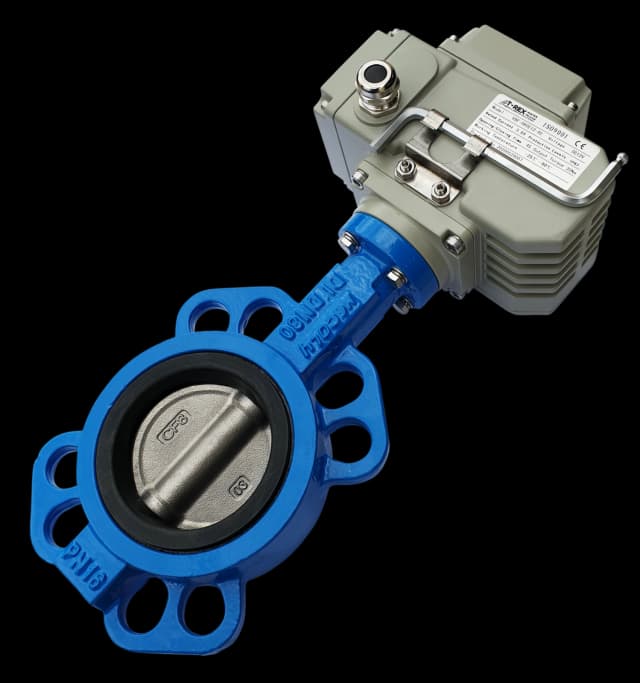
- Wafer Type: A compact design that is clamped between two pipe flanges, ideal for space-constrained installations.
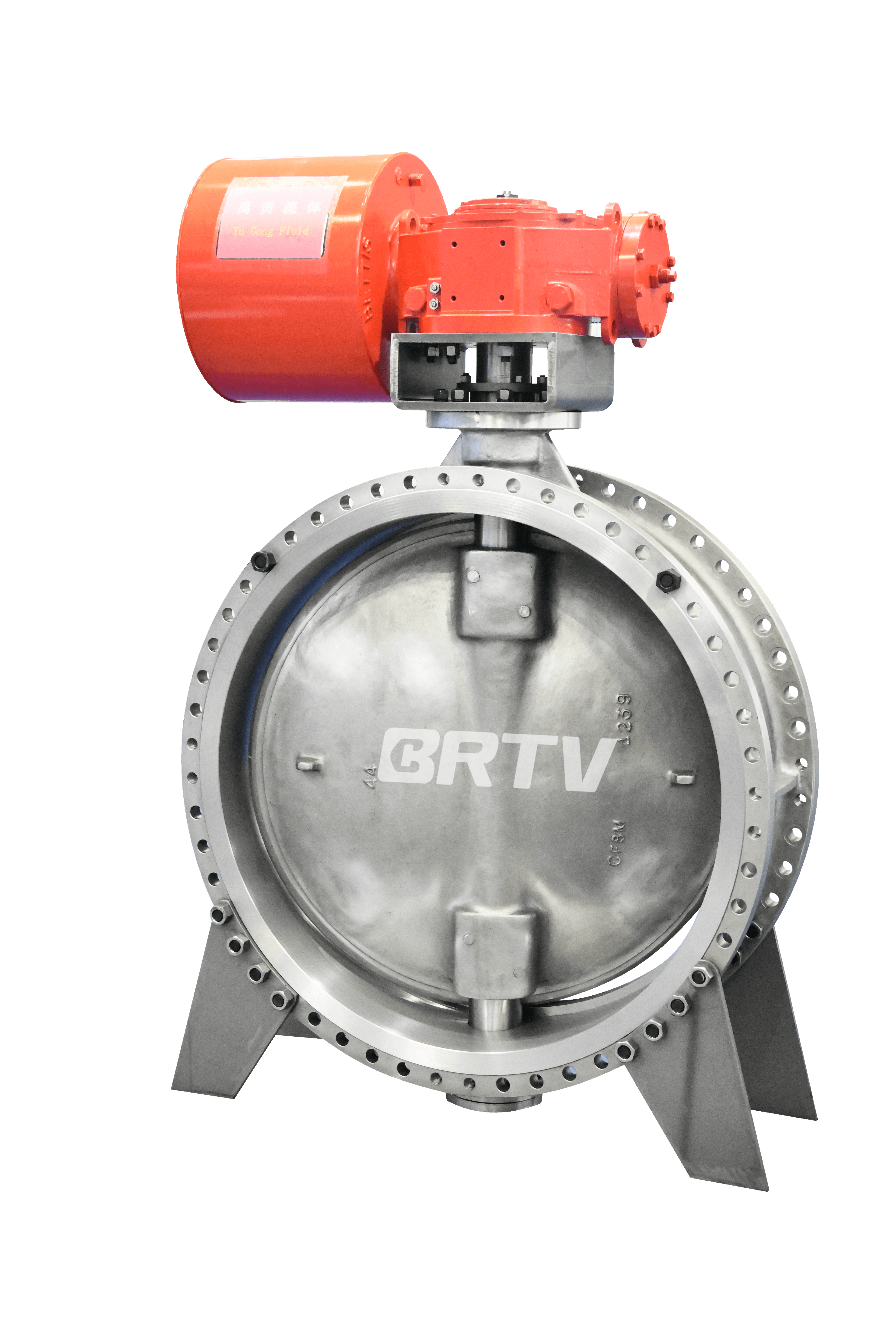
- Flanged Type: Features integral flanges for direct bolting to the pipeline, offering enhanced stability for large-diameter or high-stress systems.
- High-Performance Eccentric Design: Includes double or triple offset configurations that minimize seat wear and allow for reliable sealing in steam and high-temperature gas services.
4. Core Advantages of the Pneumatic System
The integration of pneumatic actuation with a rotary disc design offers several technical benefits for industrial operations:
- Quick and Safe: Pneumatic actuation switches quicker than electric and this makes them ideal to an emergency shutdown system. In addition, spring-return (fail-safe) configurations mean the device will automatically move to a service position upon loss of power or air supply.
- Ermeto DIN valves come with EPDM, FPM and PTFE seats for bi-directional' sealing requirements to meet most global standards. A great many have an ISO 5211 mounting to allow swapping in of actuators.
- Robustness for Environmental Challenges: Hard-anodized aluminum actuators and corrosion-resistant body materials ensure reliable operation in wet/humid or chemically-active environments.
| Component | Example Materials | Performance Advantage |
|---|
| Body | PVDF, WCB, CF8M, PPH | Balances structural strength with chemical resistance |
| Disc | SS316, SS304, CPVC | Precision-machined to reduce operating torque |
| Sealing Seats | PTFE, EPDM, FPM, RPTFE | High chemical stability and bubble-tight shut-off |
| Actuator | Anodized Aluminum Alloy | Lightweight and resistant to external corrosion |
5. Industrial Applications
This versatility is the main reason that different critical sectors have made Pneumatic Butterfly Valve a must-have for their industries:
- Chemical and Pharmaceuticals — Used to regulate aggressive acids, bases, and solvents. This makes PVDF and lined metal units ideal because of the chemically inert nature.
- Water Treatment & Desalination: Used with chlorine in sewage treatment and desalinization plants, this prevents any chance of corrosion since they are resistant to chlorinated water and brine (PPH model only).
- Semiconductor and Lithium Battery - two high-purity related applications use pure plastic pneumatic units for transporting ultrapure water or electrolytes to prevent metal ion contamination during the manufacturing process.
- Energy and Metallurgy: In applications such as in power plants and refineries where the standards are high temperatures, pressures managing cooling water, exhaust gases & steam Metal triple eccentric models prove to be important.