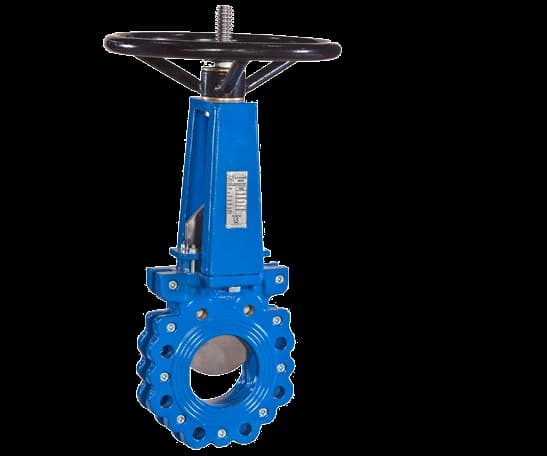
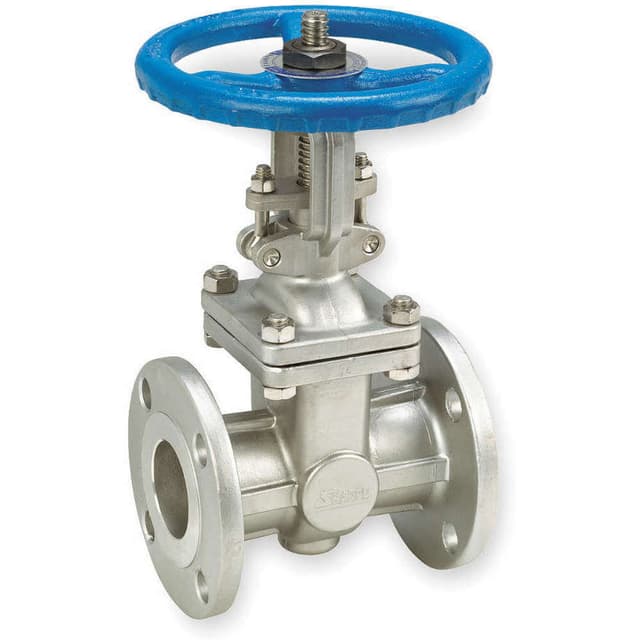
1. What is Wafer Gate Valve?
This valve has very compact size and designed to be installed in the piping system where short longitudinal space exists this is a wafer type gate-valve. The Turnaround Tool is a slim, lightweight tool made to be clamped in between two pipeline flanges utilizing the bolt compression of the same flange itself for holding up this complete unit. Because the wafer design has no flanges, it is also ideal for high-pressure industrial systems where larger face-to-face dimensions are standard on full-bodied valves. Construction is carried out on cast steel WCB/ stainless steels versions CF8 and CF8M to assure with global pressure standards from PN1 0 to PN1. 6 MPa.
As a high-performance closure unit, this equipment is frequently utilized in applications involving heavy slurries, powders, or viscous media. The internal design often features a knife-edged or sliding plate that moves perpendicularly to the flow of the media. This allow the unit to cut through suspended solids and ensure a tight shut-off without the risk of material accumulation in the seat. Whether configured with a manual handwheel or integrated with an automated pneumatic execution system, this isolation solution provides a reliable barrier within thermal and chemical loops.
2. How this Wafer Device Works?
The operational principle of this industrial assembly centers on a linear mechanism that translates mechanical or pneumatic force into the vertical motion of a sealing blade. By shifting the internal plate across the flow path, the device can effectively stop or permit the movement of process fluids.
The core operational stages include:
- Actuation Phase: The process is initiated by a manual operator or an automated execution unit, such as the AT or GT series pneumatic actuator. This unit generates the necessary torque or thrust, which is transmitted through a precision-machined stem, often made from 2Cr13 or 304 stainless steel.
- Cutting and Travel: As the stem moves downward, the sliding blade enters the flow stream. The narrow profile of the wafer body guides the blade precisely toward the sealing surface. In media containing solids or fibers, the sharp edge of the blade shears through the material, ensuring that the path is cleared for a complete closure.
- Sealing and Stabilization: When the blade reaches the fully closed position, it engages with the internal seat. High-quality packing materials like PTFE or flexible graphite are utilized around the stem to maintain a leak-free external seal. The equilibrium achieved prevents backflow and protects downstream equipment from contamination or pressure surges.
3. Types of Wafer-style Units
3.1 Material Classification and Properties
To meet the demands of various chemical and abrasive environments, these isolation units are produced in several metallurgical configurations:
- Series: Carbon Steel (WCB)The main material to be chosen for non-corrosive industrial applications. These devices possess outstanding long-term stability and maintain operation above 425 degrees Celsius.
- Stainless Steel (CF8, CF8M) Series:- Especially for corrosive media these models are completely resistant from oxidation and acid-base reactions. They serve food processing, pharmaceuticals and targeted chemical sectors.
- Available in Ceramic-Lined Variants: Models featuring ceramic double-plate structures provide outstanding wear resistance. Which makes them excellent for handling fly ash or abrasive mineral slurries that would prematurely erode standard metallic components.
3.2 Actuation and Control Variants
- Manual Handwheel Operation: Provides a simple and dependable mechanical interface for pipelines where automated remote control is not required.
- Pneumatic Automation Systems: Equipped with AT or GT series aluminum alloy actuators, these provide rapid response times and can be integrated into automated plant control loops for efficient management.
- Electric Motorized Systems: Utilizing high-torque electronic actuators, these allow for precise movement and status feedback within a central control room, functioning without the need for compressed air.
4. Core Advantages of the Wafer System
The integration of a dedicated wafer-style isolation system provides several technical benefits that enhance the operational lifespan and safety of industrial infrastructure.
- Space-Saving Architecture: The slim profile significantly reduces the weight and footprint of the valve, allowing for easier installation in tight spaces and reducing the overall load on the piping support structure.
- Superior Cutting Capability: The sharp internal blade is specifically designed to handle media with high solids content, ensuring a clean shut-off where traditional valves might become clogged.
- Ease of Maintenance: Due to the wafer connection, the unit can be easily removed for inspection or repair by loosening the flange bolts, minimizing downtime during facility maintenance.
| Component | Example Materials | Performance Advantage |
|---|
| Main Body | WCB, CF8, CF8M | Compact design with high pressure rating |
| Sliding Blade | 304SS, Ceramic | High hardness for cutting through solids |
| Drive Stem | 2Cr13, 304SS | Smooth linear motion and corrosion resistance |
| Stem Packing | PTFE, Graphite | High-integrity external seal under pressure |
| Actuator | Aluminum Alloy (AT/GT) | Reliable remote operation and rapid response |
5. Industrial Applications
The Wafer Gate Valve finds critical applications in many of the specialized sectors due to its versatile and compact design:
- Mining and Mineral Processing: Required to separate coarse abrasive tailings, knife-edge design minimizes material packing in slurry lines.
- Pulp and Paper Manufacturing: Designed to handle high-consistency paper stock, pulp fibers allowing the system to be safely isolated for processing or maintenance.
- Power GenerationFly ash and dry bulk materials in coal-fired plants when ceramic-lined venturis to handle erosion are used.
- Chemical and water treatment: The stainless steel models achieve a long working life during the handling of aggressive chemical mixtures, or in wastewater sludge; keeping system integrity intact under harsh conditions.